











-
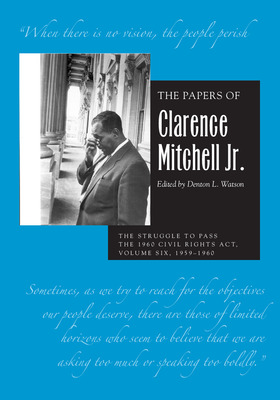
The Papers of Clarence Mitchell Jr., Volume V : The Struggle to Pass the 1957 Civil Rights Act, 1955–1958
Clarence Mitchell Jr. and Denton L. Watson
Volume V of The Papers of Clarence Mitchell Jr. records the successful effort to pass the 1957 Civil Rights Act: the first federal civil rights legislation since 1875.
Prior to the US Supreme Court’s landmark 1954 decision in Brown v. Board of Education, the NAACP had faced an impenetrable wall of opposition from southerners in Congress. Basing their assertions on the court’s 1896 “separate but equal” decision in Plessy v. Ferguson, legislators from the South maintained that their Jim Crow system was nondiscriminatory and thus constitutional. In their view, further civil rights laws were unnecessary. In ruling that legally mandated segregation of public schools was unconstitutional, the Brown decision demolished the southerners’ argument. Mitchell then launched the decisive stage of the struggle to pass modern civil rights laws.
The passage of the Civil Rights Act of 1957 was the first comprehensive lobbying campaign by an organization dedicated to that purpose since Reconstruction. Coming on the heels of the Brown decision, the 1957 law was a turning point in the struggle to accord Black citizens full equality under the Constitution. The act’s passage, however, was nearly derailed in the Senate by southern opposition and Senator Strom Thurmond’s record-setting filibuster, which lasted more than twenty-four hours. Congress later weakened several provisions of the act but—crucially—it broke a psychological barrier to the legislative enactment of such measures.
The Papers of Clarence Mitchell Jr. is a detailed record of the NAACP leader’s success in bringing the legislative branch together with the judicial and executive branches to provide civil rights protections during the twentieth century. -
The Phenomenology of Pain
Saulius Geniusas
The Phenomenology of Pain is the first book-length investigation of its topic to appear in English. Groundbreaking, systematic, and illuminating, it opens a dialogue between phenomenology and such disciplines as cognitive science and cultural anthropology to argue that science alone cannot clarify the nature of pain experience without incorporating a phenomenological approach. Building on this premise, Saulius Geniusas develops a novel conception of pain grounded in phenomenological principles: pain is an aversive bodily feeling with a distinct experiential quality, which can only be given in original first-hand experience, either as a feeling-sensation or as an emotion.
Geniusas crystallizes the fundamental methodological principles that underlie phenomenological research. On the basis of those principles, he offers a phenomenological clarification of the fundamental structures of pain experience and contests the common conflation of phenomenology with introspectionism. Geniusas analyzes numerous pain dissociation syndromes, brings into focus the de-personalizing and re-personalizing nature of chronic pain experience, and demonstrates what role somatization and psychologization play in pain experience. In the process, he advances Husserlian phenomenology in a direction that is not explicitly worked out in Husserl’s own writings.Award(s): Hermes Award, International Institute of Hermeneutics, Edward Goodwin Ballard Prize in Phenomenology
-
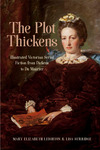
The Plot Thickens : Illustrated Victorian Serial Fiction from Dickens to Du Maurier
Mary Elizabeth Leighton and Lisa Surridge
In the early 1800s, books were largely unillustrated. By the 1830s and 1840s, however, innovations in wood- and steel-engraving techniques changed how Victorian readers consumed and conceptualized fiction. A new type of novel was born, often published in serial form, one that melded text and image as partners in meaning-making.
These illustrated serial novels offered Victorians a reading experience that was both verbal and visual, based on complex effects of flash-forward and flashback as the placement of illustrations revealed or recalled significant story elements. Victorians’ experience of what are now canonical novels thus differed markedly from that of modern readers, who are accustomed to reading single volumes with minimal illustration. Even if modern editions do reproduce illustrations, these do not appear as originally laid out. Modern readers therefore lose a crucial aspect of how Victorians understood plot—as a story delivered in both words and images, over time, and with illustrations playing a key role.
In The Plot Thickens, Mary Elizabeth Leighton and Lisa Surridge uncover this overlooked narrative role of illustrations within Victorian serial fiction. They reveal the intricacy and richness of the form and push us to reconsider our notions of illustration, visual culture, narration, and reading practices in nineteenth-century Britain. -
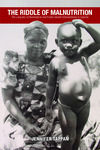
The Riddle of Malnutrition : The Long Arc of Biomedical and Public Health Interventions in Uganda
Jennifer Tappan
More than ten million children suffer from severe acute malnutrition globally each year. In Uganda, longstanding efforts to understand, treat, and then prevent the condition initially served to medicalize it, in the eyes of both biomedical personnel and Ugandans who brought their children to the hospital for treatment and care. Medicalization meant malnutrition came to be seen as a disease—as a medical emergency—not a preventable condition, further compromising nutritional health in Uganda.
Rather than rely on a foreign-led model, physicians in Uganda responded to this failure by developing a novel public health program known as Mwanamugimu. The new approach prioritized local expertise and empowering Ugandan women, blending biomedical knowledge with African sensibilities and cultural competencies.
In The Riddle of Malnutrition, Jennifer Tappan examines how over the course of half a century Mwanamugimu tackled the most fatal form of childhood malnutrition—kwashiorkor—and promoted nutritional health in the midst of postcolonial violence, political upheaval, and neoliberal resource constraints. She draws on a diverse array of sources to illuminate the interplay between colonialism, the production of scientific knowledge, and the delivery of health services in contemporary Africa. -
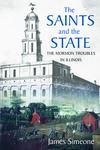
The Saints and the State : The Mormon Troubles in Illinois
James Simeone
A compelling history of the 1846 Mormon expulsion from Illinois that exemplifies the limits of American democracy and religious tolerance.
When members of the Church of Jesus Christ of Latter-day Saints (known as Mormons) settled in Illinois in 1839, they had been persecuted for their beliefs from Ohio to Missouri. Illinoisans viewed themselves as religiously tolerant egalitarians and initially welcomed the Mormons to their state. However, non-Mormon locals who valued competitive individualism perceived the saints‘ western Illinois settlement, Nauvoo, as a theocracy with too much political power. Amid escalating tensions in 1844, anti-Mormon vigilantes assassinated church founder Joseph Smith and his brother Hyrum. Two years later, the state expelled the saints. Illinois rejected the Mormons not for their religion, but rather for their effort to create a self-governing state in Nauvoo.
Mormons put the essential aspirations of American liberal democracy to the test in Illinois. The saints’ inward group focus and their decision to live together in Nauvoo highlight the challenges strong group consciousness and attachment pose to democratic governance. The Saints and the State narrates this tragic story as an epic failure of governance and shows how the conflicting demands of fairness to the Mormons and accountability to Illinois’s majority became incompatible. -
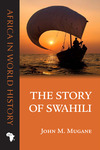
The Story of Swahili
John M. Mugane
Swahili was once an obscure dialect of an East African Bantu language. Today more than one hundred million people use it: Swahili is to eastern and central Africa what English is to the world. From its embrace in the 1960s by the black freedom movement in the United States to its adoption in 2004 as the African Union’s official language, Swahili has become a truly international language. How this came about and why, of all African languages, it happened only to Swahili is the story that John M. Mugane sets out to explore.
The remarkable adaptability of Swahili has allowed Africans and others to tailor the language to their needs, extending its influence far beyond its place of origin. Its symbolic as well as its practical power has evolved from its status as a language of contact among diverse cultures, even as it embodies the history of communities in eastern and central Africa and throughout the Indian Ocean world.
The Story of Swahili calls for a reevaluation of the widespread assumption that cultural superiority, military conquest, and economic dominance determine a language’s prosperity. This sweeping history gives a vibrant, living language its due, highlighting its nimbleness from its beginnings to its place today in the fast-changing world of global communication.
-
Thinking between Deleuze and Merleau-Ponty
Judith Wambacq
Thinking between Deleuze and Merleau-Ponty is the first book-length examination of the relation between these two major thinkers of the twentieth century. Questioning the dominant view that the two have little of substance in common, Judith Wambacq brings them into a compelling dialogue to reveal a shared, historically grounded concern with the transcendental conditions of thought. Both Merleau-Ponty and Deleuze propose an immanent ontology, differing more in style than in substance. Wambacq’s synthetic treatment is nevertheless critical; she identifies the limitations of each thinker’s approach to immanent transcendental philosophy and traces its implications—through their respective relationships with Bergson, Proust, Cézanne, and Saussure—for ontology, language, artistic expression, and the thinking of difference. Drawing on primary texts alongside current scholarship in both French and English, Thinking between Deleuze and Merleau-Ponty is comprehensive and rigorous while remaining clear, accessible, and lively. It is certain to become the standard text for future scholarly discussion of these two major influences on contemporary thought.
-
Threatening Others : Nicaraguans and the Formation of National Identities in Costa Rica
Carlos Sandoval-Garcia
During the last two decades, a decline in public investment has undermined some of the national values and institutions of Costa Rica. The resulting sense of dislocation and loss is usually projected onto Nicaraguan “immigrants.”
Threatening Others: Nicaraguans and the Formation of National Identities in Costa Rica explores the representation of the Nicaraguan “other” in the Costa Rican imagery. It also seeks to address more generally why the sense of national belonging constitutes a crucial identification in contemporary societies. Interdisciplinary and based on extensive fieldwork, it looks critically at the “exceptionalism” that Costa Ricans take for granted and view as a part of their national identity.
Carlos Sandoval-García argues that Nicaraguan immigrants, once perceived as a “communist threat,” are now victims of an invigorated, racialized politics in which the Nicaraguan nationality has become an offense in itself.
Threatening Others is a deeply searching book that will interest scholars and students in Latin American studies and politics, cultural studies, and ethnic studies. -
Toxic Timescapes: Examining Toxicity across Time and Space
Simone M. Müller and May-Brith Ohman Nielsen
An interdisciplinary environmental humanities volume that explores human-environment relationships on our permanently polluted planet.
While toxicity and pollution are ever present in modern daily life, politicians, juridical systems, media outlets, scholars, and the public alike show great difficulty in detecting, defining, monitoring, or generally coming to terms with them. This volume’s contributors argue that the source of this difficulty lies in the struggle to make sense of the intersecting temporal and spatial scales working on the human and more-than-human body, while continuing to acknowledge race, class, and gender in terms of global environmental justice and social inequality.
The term toxic timescapes refers to this intricate intersectionality of time, space, and bodies in relation to toxic exposure. As a tool of analysis, it unpacks linear understandings of time and explores how harmful substances permeate temporal and physical space as both event and process. It equips scholars with new ways of creating data and conceptualizing the past, present, and future presence and possible effects of harmful substances and provides a theoretical framework for new environmental narratives. To think in terms of toxic timescapes is to radically shift our understanding of toxicants in the complex web of life.
Toxicity, pollution, and modes of exposure are never static; therefore, dose, timing, velocity, mixture, frequency, and chronology matter as much as the geographic location and societal position of those exposed. Together, these factors create a specific toxic timescape that lies at the heart of each contributor’s narrative. Contributors from the disciplines of history, human geography, science and technology studies, philosophy, and political ecology come together to demonstrate the complex reality of a toxic existence. Their case studies span the globe as they observe the intersection of multiple times and spaces at such diverse locations as former battlefields in Vietnam, aging nuclear-weapon storage facilities in Greenland, waste deposits in southern Italy, chemical facilities along the Gulf of Mexico, and coral-breeding laboratories across the world.
-
Transported to Botany Bay : Class, National Identity, and the Literary Figure of the Australian Convict
Dorice Williams Elliott
Literary representations of British convicts exiled to Australia were the most likely way that the typical English reader would learn about the new colonies there. In Transported to Botany Bay, Dorice Williams Elliott examines how writers—from canonical ones such as Dickens and Trollope to others who were themselves convicts—used the figure of the felon exiled to Australia to construct class, race, and national identity as intertwined.
Even as England’s supposedly ancient social structure was preserved and venerated as the “true” England, the transportation of some 168,000 convicts facilitated the birth of a new nation with more fluid class relations for those who didn’t fit into the prevailing national image. In analyzing novels, broadsides, and first-person accounts, Elliott demonstrates how Britain linked class, race, and national identity at a key historical moment when it was still negotiating its relationship with its empire. The events and incidents depicted as taking place literally on the other side of the world, she argues, deeply affected people’s sense of their place in their own society, with transnational implications that are still relevant today.
-
Under the Heel of the Dragon : Islam, Racism, Crime, and the Uighur in China
Blaine Kaltman
The Turkic Muslims known as the Uighur have long faced social and economic disadvantages in China because of their minority status. Under the Heel of the Dragon: Islam, Racism, Crime, and the Uighur in China offers a unique insight into current conflicts resulting from the rise of Islamic fundamentalism and the Chinese government’s oppression of religious minorities, issues that have heightened the degree of polarization between the Uighur and the dominant Chinese ethnic group, the Han.
Author Blaine Kaltman’s study is based on in-depth interviews that he conducted in Chinese without the aid of an interpreter or the knowledge of the Chinese government. These riveting conversations expose the thoughts of a wide socioeconomic spectrum of Han and Uighur, revealing their mutual prejudices. The Uighur believe that the Han discriminate against them in almost every aspect of their lives, and this perception of racism motivates Uighur prejudice against the Han.
Kaltman reports that criminal activity by Uighur is directed against their perceived oppressors, the Han Chinese. Uighur also resist Han authority by flouting the laws—such as tax and licensing regulations or prohibitions on the use or sale of hashish—that they consider to be imposed on them by an alien regime. Under the Heel of the Dragon offers a unique insight into a misunderstood world and a detailed explanation of the cultural perceptions that drive these misconceptions. -
Unruly Ideas: A History of Kitawala in Congo
Nicole Eggers
Original oral and ethnographic sources inform this conceptual history of power in central Africa, imagined through the lens of Kitawala religious practices.
Unruly Ideas: A History of Kitawala in Congo recounts the multifaceted history of the Congolese religious movement Kitawala from its colonial beginnings in the 1920s through its continued practice in some of the most conflict-riven parts of the eastern Democratic Republic of Congo today. Drawing on a rich body of original oral, ethnographic, and archival research, Nicole Eggers uses Kitawala as a lens through which to address the complex relationship between politics, religion, healing, and violence in central African history.
Kitawala, which has roots in the African Watchtower (Jehovah’s Witness) movement, has long been viewed both by scholars and by popular historians as a form of male-dominated, anticolonial insurgency. But just as Kitawalists were never exclusively male, their teachings and activities were never directed solely at the Belgian colonial state, and their yearnings for self-rule were never entirely about the secular realms of authority. A more comprehensive look at the oral and archival evidence reveals they were and are concerned with the morality of power more broadly: on state, communal, and individual levels. Moreover, Kitawalist doctrine is itself unruly, and its preachers, prophets, and practitioners have articulated innumerable interpretations—most quite different from Watchtower Christianity—across space and time.
More than a case study of a particular religious movement, Unruly Ideas is a conceptual history of power that investigates how communities and individuals in the region have historically imagined power, sought to access it, wielded it, and policed the morality of its uses. By focusing on power and its intellectual and social history in Congo, Unruly Ideas creates an analytical space in which readers can understand the differing manifestations of Kitawala—from its overtly political and sometimes violent moments to those more aptly characterized as individual quests for spiritual and physical therapy—as varying themes in the same story: the pursuit of wellness in the context of malady.
On a more practical level, the book raises important questions about the project of writing histories of places like eastern Congo: a region where the repercussions of decades of political neglect, upheaval, and violence force us to reconsider how we can think about and use oral and archival sources. Finally, the book investigates the embodied and gendered nature of field research and interrogates the intersubjective and reciprocal nature of knowledge production.
-
Village Work : Development and Rural Statecraft in Twentieth-Century Ghana
Alice Wiemers
A robust historical case study that demonstrates how village development became central to the rhetoric and practice of statecraft in rural Ghana
Combining oral histories with decades of archival material, Village Work formulates a sweeping history of twentieth-century statecraft that centers on the daily work of rural people, local officials, and family networks, rather than on the national governments and large-scale plans that often dominate development stories. Wiemers shows that developmentalism was not simply created by governments and imposed on the governed; instead, it was jointly constructed through interactions between them.The book contributes to the historiographies of development and statecraft in Africa and the Global South by:
—emphasizing the piecemeal, contingent, and largely improvised ways both development and the state are comprised and experienced;
—providing new entry points into longstanding discussions about developmental power and discourse;
—unsettling common ideas about how and by whom states are made;
—exposing the importance of unpaid labor in mediating relationships between governments and the governed;
—showing how state engagement could both exacerbate and disrupt inequities
Despite massive changes in twentieth-century political structures—the imposition and destruction of colonial rule, nationalist plans for pan-African solidarity and modernization, multiple military coups, and the rise of neoliberal austerity policies—unremunerated labor and demonstrations of local leadership have remained central tools by which rural Ghanaians have interacted with the state.
Grounding its analysis of statecraft in decades of daily negotiations over budgets and bureaucracy, the book tells the stories of developers who decided how and where projects would be sited, of constituents who performed labor, and of a chief and his large cadre of educated children who met and shaped demands for local leaders. For a variety of actors, invoking “the village” became a convenient way to allocate or attract limited resources, to highlight or downplay struggles over power, and to forge national and international networks. -

Wangari Maathai
Tabitha M. Kanogo
Wangari Muta Maathai is one of Africa’s most celebrated female activists. Originally trained as a scientist in Kenya and abroad, Professor Maathai returned to her home country of Kenya with a renewed political consciousness. There, she began her long career as an activist, campaigning for environmental and social justice while speaking out against government corruption. In 2004, Maathai was awarded the Nobel Peace Prize for her leadership of the Green Belt Movement, a conservation effort that resulted in the restoration of African forests decimated during the colonial era.
In this biography, Tabitha Kanogo follows Wangari Maathai from her modest, rural Kenyan upbringing to her rise as a national figure campaigning for environmental and ecological conservation, sustainable development, democracy, human rights, gender equality, and the eradication of poverty until her death in 2011. -
War and Society in Colonial Zambia, 1939–1953
Alfred Tembo
Written from a Zambian perspective, this leading study shows how the British colony of Northern Rhodesia (later Zambia) organized and deployed human, military, and natural resources during and after the Second World War.
The Second World War brought unprecedented pressures to bear on Britain’s empire, which then included colonial Northern Rhodesia. Through new archival materials and oral histories, War and Society in Colonial Zambia tells—from an African perspective—the story of how the colony organized its human and natural resources on behalf of the imperial government.
Alfred Tembo first examines government propaganda and recruitment of personnel for the Northern Rhodesia Regiment, which served in East Africa, Palestine, Ceylon, Burma, and India. Later, Zambia’s economic contribution to the Allied war effort would foreground the central importance of the colony’s mining industry as well as its role as supplier of rubber and beeswax following the fall of the Southeast Asian colonies to the Japanese in early 1942. Finally, Tembo presents archival and oral evidence about life on the home front, including the social impact of wartime commodity shortages, difficulties posed by incoming Polish refugees, and the more interventionist forms of colonial governance that these circumstances engendered.Award: Young Scholars First Book Fund
-
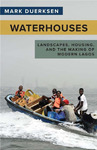
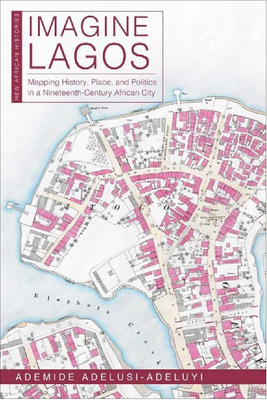
Waterhouses : Landscapes, Housing, and the Making of Modern Lagos
Mark Duerksen
Waterhouses is about the places the people of Lagos have inhabited, imagined, and made home for the past two centuries. It asks what a house in Lagos is and explores how the answer to that question has been historically constructed and reconstructed in turn with the city’s changing landscapes. Written for historians of African and Atlantic history, scholars and practitioners of urbanism, and anyone looking to make sense of Africa’s most populous metropolis today, the book is an approachable history of how houses and water have formed modern Lagos.
The book argues that in the coastlands from which Lagos rose, housing architectures were the single most important social, material, and political instruments for people hoping to contour the city’s landscapes—both its ecology and its image—and its historical course. The forms and meanings of houses in Lagos have shifted dramatically over time and in ways that reveal how power, house making, visual perception, and the environment are entangled in modern cities.
The book’s chapters encompass six eras and six waterscapes: sandbars, canals, swamps, lagoons, oceans, and floods. These spaces guide the book’s exploration of how people saw and attempted to remake Lagos’s environs in a process that invariably involved housing architectures. At its core, Lagos is a city built through the materials, relations, and powers contained in the dry, solid, and hospitable spaces of homes, which have long been scarce and culturally celebrated resources in the city’s water-constricted setting. While shelter is integral to any city’s development, houses have been particularly important and sought after in Lagos because of the city’s land shortages and because of the societal influence and physical footprint of traditional Yoruba ilé (family compounds), in which activities were historically organized and centered.
Through dozens of maps, photographs, and housing plans found in British and Nigerian archives, this book traces the relationship between Lagos’s residential spaces and its urban landscapes across the rise, fall, and aftermath of British colonization. By showing how Yoruba visions of home—though often forgotten or misunderstood today—coexisted with European notions, Waterhouses offers urban planners, policy makers, and architects ideas for how the definingly human act of inhabiting a place might be grounded in practices of continuous custodianship rather than extractive possession. -

Wilfrid Sellars and Phenomenology : Intersections, Encounters, Oppositions
Daniele De Santis and Danilo Manca
Wilfrid Sellars tackled the difficult problems of reconciling Pittsburgh school–style analytic thought, Husserlian phenomenology, and the Myth of the Given.
This collection of essays brings into dialogue the analytic philosophy of Wilfrid Sellars—founder of the Pittsburgh school of thought—and phenomenology, with a special focus on the work of Edmund Husserl. The book’s wide-ranging discussions include the famous Myth of the Given but also more traditional problems in the philosophy of mind and phenomenology such as the
status of perception and imagination
nature of intentionality
concept of motivation
relationship between linguistic and nonlinguistic experiences
relationship between conceptual and preconceptual experiences
Moreover, the volume addresses the conflicts between Sellars’s manifest and scientific images of the world and Husserl’s ontology of the life-world. The volume takes as a point of departure Sellars’s criticism of the Myth of the Given, but only to show the many problems that label obscures. Contributors explain aspects of Sellars’s philosophy vis-à-vis Husserl’s phenomenology, articulating the central problems and solutions of each. The book is a must-read for scholars and students interested in learning more about Sellars and for those comparing Continental and analytic philosophical thought.
Contributors
Walter Hopp
Wolfgang Huemer
Roberta Lanfredini
Danilo Manca
Karl Mertens
Antonio Nunziante
Jacob Rump
Daniele De Santis
Michela Summa -
Witchcraft Dialogues : Anthropological and Philosophical Exchanges
George Clement Bond and Diane M. Ciekawy
Witchcraft Dialogues analyzes the complex manner in which human beings construct, experience, and think about the occult. It brings together anthropologists, philosophers, and sociologists, from diverse social and cultural backgrounds, to engage the metaphysical properties of witchcraft and sorcery and to explore their manifestations in people’s lived experiences.
While many Africanist scholars shun the analysis of witchcraft as an appropriate domain of investigation, the experiences, thoughts, activities, and powers that witchcraft encompasses have become increasingly the source of interest and debate. Concepts of witchcraft and the phenomena to which they are applied express something fundamental to the human condition and have their equation in the logic of other human practices such as racism and its various crafts. Thus, the focus on witchcraft is not just a concern with the occult, but a manifestation of the convergence of interest in mediating and transcending disciplinary domains.
The contributors to this volume embrace the challenge of exploring witchcraft as a mode of experiencing and explaining human circumstances as well as confronting the limitations of their own intellectual traditions and paradigms. The range of their explorations takes us in new directions, making use not only of their academic training but also of their personal experiences, to reframe the conceptual terrain of the occult and the epistemological orientations of their various academic fields of inquiry. -
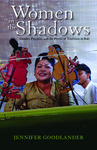
Women in the Shadows : Gender, Puppets, and the Power of Tradition in Bali
Jennifer Goodlander
Wayang kulit, or shadow puppetry, connects a mythic past to the present through public ritual performance and is one of most important performance traditions in Bali. The dalang, or puppeteer, is revered in Balinese society as a teacher and spiritual leader. Recently, women have begun to study and perform in this traditionally male role, an innovation that has triggered resistance and controversy.
In Women in the Shadows, Jennifer Goodlander draws on her own experience training as a dalang as well as interviews with early women dalang and leading artists to upend the usual assessments of such gender role shifts. She argues that rather than assuming that women performers are necessarily mounting a challenge to tradition, “tradition” in Bali must be understood as a system of power that is inextricably linked to gender hierarchy.
She examines the very idea of “tradition” and how it forms both an ideological and social foundation in Balinese culture. Ultimately, Goodlander offers a richer, more complicated understanding of both tradition and gender in Balinese society. Following in the footsteps of other eminent reflexive ethnographies, Women in the Shadows will be of value to anyone interested in performance studies, Southeast Asian culture, or ethnographic methods. -
Women’s Perspectives on Human Security: Violence, Environment, and Sustainability
Richard Matthew; Patricia A, Weitsman; Gunhild Hoogensen Gjørv; Nora Davis; and Tera Dornfeld
Violent conflict, climate change, and poverty present distinct threats to women worldwide. Importantly, women are leading the way creating and sharing sustainable solutions.
Women’s security is a valuable analytical tool as well as a political agenda insofar as it addresses the specific problems affecting women’s ability to live dignified, free, and secure lives. First, this collection focuses on how conflict impacts women’s lives and well-being, including rape and gendered constructions of ethnicity, race, and religion. The book’s second section looks beyond the scope of large-scale violence to examine human security in terms of environmental policy, food, water, health, and economics.
Multidisciplinary in scope, these essays from new and established contributors draw from gender studies, international relations, criminology, political science, economics, sociology, biological and ecological sciences, and planning.
-
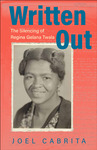
Written Out : The Silencing of Regina Gelana Twala
Joel Cabrita
Systemic racism and sexism caused one of South Africa’s most important writers to disappear from public consciousness. Is it possible to justly restore her historical presence?
Regina Gelana Twala, a Black South African woman who died in 1968 in Swaziland (now Eswatini), was an extraordinarily prolific writer of books, columns, articles, and letters. Yet today Twala’s name is largely unknown. Her literary achievements are forgotten. Her books are unpublished. Her letters languish in the dusty study of a deceased South African academic. Her articles are buried in discontinued publications.
Joel Cabrita asserts that Twala’s posthumous obscurity has not developed accidentally as she exposes the ways prejudices around race and gender blocked Black African women like Twala from establishing themselves as successful writers. Drawing upon Twala’s family papers, interviews, newspapers, and archival records from Pretoria, Uppsala, and Los Angeles, Cabrita argues that an entire cast of characters—censorious editors, territorial White academics, apartheid officials, and male African politicians whose politics were at odds with her own—conspired to erase Twala’s legacy. Through her unique documentary output, Twala marked herself as a radical voice on issues of gender, race, and class. The literary gatekeepers of the racist and sexist society of twentieth-century southern Africa clamped down by literally writing her out of the region’s history.
Written Out also scrutinizes the troubled racial politics of African history as a discipline that has been historically dominated by White academics, a situation that many people within the field are now examining critically. Inspired by this recent movement, Cabrita interrogates what it means for her—a White historian based in the Northern Hemisphere—to tell the story of a Black African woman. Far from a laudable “recovery” of an important lost figure, Cabrita acknowledges that her biography inevitably reproduces old dynamics of White scholarly privilege and dominance. Cabrita’s narration of Twala’s career resurrects it but also reminds us that Twala, tragically, is still not the author of her own life story.Award(s): Finalist, Best Book Prize, African Studies Association of the UK, Best Biography — National Institute for the Humanities and Social Sciences (South Africa), Winner, Aidoo-Snyder Book Prize
-
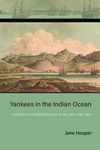
Yankees in the Indian Ocean : American Commerce and Whaling, 1786–1860
Jane Hooper
The history of US imperialism remains incomplete without this consideration of long-overlooked nineteenth-century American commercial and whaling ventures in the Indian Ocean.
Yankees in the Indian Ocean shows how nineteenth-century American merchant and whaler activity in the Indian Ocean shaped the imperial future of the United States, influenced the region’s commerce, encouraged illegal slaving, and contributed to environmental degradation. For a brief time, Americans outnumbered other Western visitors to Mauritius, Madagascar, Zanzibar, and the East African littoral. In a relentless search for commodities and provisions, American whaleships landed at islands throughout the ocean and stripped them of resources. Yet Americans failed to develop a permanent foothold in the region and operated instead from a position of weakness relative to other major colonizing powers, thus discouraging the development of American imperial holdings there.
The history of American concerns in the Indian Ocean world remains largely unwritten. Scholars who focus on the region have mostly ignored American involvement, despite arguments for the ocean’s importance in powering global connections during the late eighteenth and early nineteenth centuries. Historians of the United States likewise have failed to examine the western Indian Ocean because of a preoccupation with US interests in Asia and the Pacific. Failing to understand the scale of American trade in the Indian Ocean has led to a fixation on European commercial strength to the exclusion of other maritime networks. Instead, this book reveals how the people of Madagascar and East Africa helped the United States briefly dominate commerce and whaling.
This book investigates how and why Americans were drawn to the western Indian Ocean years before the United States established a formal overseas empire in the late nineteenth century. Ship logs, sailor journals, and travel narratives reveal how American men transformed foreign land- and seascapes into knowable spaces that confirmed American conceptions of people and natural resources; these sources also provide insight into the complex social and ecological worlds of the Indian Ocean during this critical time.Award: John Lyman Book Awards
Printing is not supported at the primary Gallery Thumbnail page. Please first navigate to a specific Image before printing.