

Files
Download Full Text (1.4 MB)
Series
Series in Victorian Studies
Description
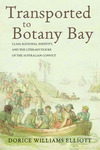
Literary representations of British convicts exiled to Australia were the most likely way that the typical English reader would learn about the new colonies there. In Transported to Botany Bay, Dorice Williams Elliott examines how writers—from canonical ones such as Dickens and Trollope to others who were themselves convicts—used the figure of the felon exiled to Australia to construct class, race, and national identity as intertwined.
Even as England’s supposedly ancient social structure was preserved and venerated as the “true” England, the transportation of some 168,000 convicts facilitated the birth of a new nation with more fluid class relations for those who didn’t fit into the prevailing national image. In analyzing novels, broadsides, and first-person accounts, Elliott demonstrates how Britain linked class, race, and national identity at a key historical moment when it was still negotiating its relationship with its empire. The events and incidents depicted as taking place literally on the other side of the world, she argues, deeply affected people’s sense of their place in their own society, with transnational implications that are still relevant today.
Copyright Statement
Transported to Botany Bay © 2019 by Ohio University Press is licensed under Creative Commons License CC BY-NC-ND. To view a copy of this license, visit https://creativecommons.org/licenses/by/4.0/
Language
eng
ISBN
9780821446690
Publication Date
4-30-2019
Publisher
Ohio University Press
City
Athens
Keywords
English fiction, Victorian Studies, European History, 19th Century, Literary criticism, exiles, prisoners, penal colonies, convicts, Australia, Australia in Literature
Disciplines
Australian Studies | English Language and Literature | European History
Creative Commons License

This work is licensed under a Creative Commons Attribution-NonCommercial-No Derivative Works 4.0 International License.
Recommended Citation
Elliott, Dorice Williams, "Transported to Botany Bay : Class, National Identity, and the Literary Figure of the Australian Convict" (2019). Ohio University Press Open Access Books. 77.
https://ohioopen.library.ohio.edu/oupress/77
Included in
Australian Studies Commons, English Language and Literature Commons, European History Commons