

Files
Download Full Text (3.1 MB)
Series
Research in International Studies, Africa Series
Description
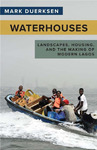
Waterhouses is about the places the people of Lagos have inhabited, imagined, and made home for the past two centuries. It asks what a house in Lagos is and explores how the answer to that question has been historically constructed and reconstructed in turn with the city’s changing landscapes. Written for historians of African and Atlantic history, scholars and practitioners of urbanism, and anyone looking to make sense of Africa’s most populous metropolis today, the book is an approachable history of how houses and water have formed modern Lagos.
The book argues that in the coastlands from which Lagos rose, housing architectures were the single most important social, material, and political instruments for people hoping to contour the city’s landscapes—both its ecology and its image—and its historical course. The forms and meanings of houses in Lagos have shifted dramatically over time and in ways that reveal how power, house making, visual perception, and the environment are entangled in modern cities.
The book’s chapters encompass six eras and six waterscapes: sandbars, canals, swamps, lagoons, oceans, and floods. These spaces guide the book’s exploration of how people saw and attempted to remake Lagos’s environs in a process that invariably involved housing architectures. At its core, Lagos is a city built through the materials, relations, and powers contained in the dry, solid, and hospitable spaces of homes, which have long been scarce and culturally celebrated resources in the city’s water-constricted setting. While shelter is integral to any city’s development, houses have been particularly important and sought after in Lagos because of the city’s land shortages and because of the societal influence and physical footprint of traditional Yoruba ilé (family compounds), in which activities were historically organized and centered.
Through dozens of maps, photographs, and housing plans found in British and Nigerian archives, this book traces the relationship between Lagos’s residential spaces and its urban landscapes across the rise, fall, and aftermath of British colonization. By showing how Yoruba visions of home—though often forgotten or misunderstood today—coexisted with European notions, Waterhouses offers urban planners, policy makers, and architects ideas for how the definingly human act of inhabiting a place might be grounded in practices of continuous custodianship rather than extractive possession.
Copyright Statement
Waterhouses © 2024 by Ohio University Press is licensed under Creative Commons License CC BY-NC-ND. To view a copy of this license, visit https://creativecommons.org/licenses/by/4.0/
Language
eng
ISBN
9780896805156
Publication Date
8-27-2024
Publisher
Ohio University Press
City
Athens
Keywords
African architecture, urban history, urban planning in Africa, urbanism, urban design, displacement in cities, climate change in cities, mapping African cities, African cityscapes, residential architecture in Africa, Yoruba ilé, Yoruba houses, Nigerian oil industry, British colonization in Africa, British empire in Africa
Disciplines
African History | African Studies | Human Geography | Urban Studies and Planning
Creative Commons License

This work is licensed under a Creative Commons Attribution-NonCommercial-No Derivative Works 4.0 International License.
Recommended Citation
Duerksen, Mark, "Waterhouses : Landscapes, Housing, and the Making of Modern Lagos" (2024). Ohio University Press Open Access Books. 110.
https://ohioopen.library.ohio.edu/oupress/110
Included in
African History Commons, African Studies Commons, Human Geography Commons, Urban Studies and Planning Commons
Comments
Funding made possible by Path to Open.