


















-
A Companion to the Works of Elizabeth Strout
Katherine Montwieler
Including an exclusive interview with bestselling American novelist Elizabeth Strout, this groundbreaking study will engage literature scholars and general readers alike.
Written in accessible language, this book is the first to offer a sustained analysis of Elizabeth Strout’s work. A recipient of the Pulitzer Prize and the O. Henry Award, among other accolades, Strout has achieved a vast popular following as well. Amy and Isabelle was made into a television movie; Olive Kitteridge, which sold more than one million copies, was adapted as a miniseries; The Burgess Boys has been optioned for HBO; and My Name Is Lucy Barton was reimagined for the stage in London and on Broadway. Oh William!, the sequel to My Name Is Lucy Barton, appeared in 2021, and Strout’s latest book, Lucy by the Sea, is slated for release in fall 2022.
At the height of her literary powers as a chronicler of American life and particularly the lives of American women, Strout is currently enjoying both commercial and critical success. Her sales and perennial presence on book club lists indicate a tremendous impact on the popular realm and the growing attention to her in academia charts her importance in American letters. This book will satisfy readers looking for a serious, in-depth introduction to Strout’s work, as well as those interested in women’s writing, contemporary fiction, ethics, and literature. It includes a new interview with Strout in which she discusses these issues.
Montwieler traces the evolution of Strout’s voice, themes, and characters, which uniquely address American twenty-first-century feminine perspectives and sensibilities. From classic domestic spats between a mother and daughter to hate crimes aimed at mosques, from sweeping forays into decades past to snapshots of contemporary life, Strout compassionately portrays humanity at its most brutal and its most intimate. Though her canvas is vast, her eye for detail is astute and her ear for nuance is keen. Looking across Strout’s work, Montwieler explores how she portrays the endurance of hope, the complexities of family, the effects of trauma on individuals and communities, the sustaining power of the natural world, and the effects of place on personal and collective character.
Strout’s creations cultivate empathy in her readers, teaching them to be attuned to the suffering of others and to the human need for connection. Across her work and in the new interview included within this book, Strout shows her readers that they are not alone in this impersonal, often violent world. The connection that acknowledges our limitations, our woundedness, our capability to do harm, our remorse, and our recognition of beauty and humor distinguishes Strout’s unique contribution to contemporary American letters. -
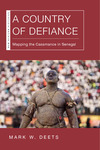
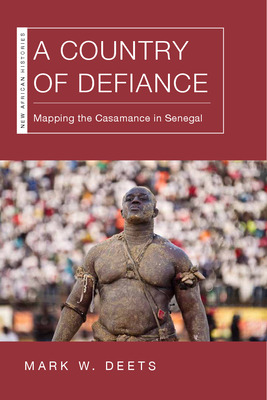
A Country of Defiance : Mapping the Casamance in Senegal
Mark W. Deets
A historiographical analysis of human geography and a social history of nationalist separatism and cultural identity in southern Senegal.
This book is a spatial history of the conflict in Casamance, the portion of Senegal located south of The Gambia. Mark W. Deets traces the origins of the conflict back to the start of the colonial period in a select group of contested spaces and places where the seeds of nationalism and separatism took root. Each chapter examines the development of a different piece of the still unrealized Casamançais nation: river, rice field, forest, school, and stadium. Each of these locations forms a spatial discourse of grievance that transformed space into place, rendering a separatist nation from the pieces where a particular Casamançais identity emerged. However, not every Casamançais identified with these spaces and places in the same way. Many refused to tie their beloved culture and landscape to the project of separatism, revealing a layer of counter-mapping below that of the separatist leaders like Father Augustin Diamacoune Senghor and Mamadou “Nkrumah” Sané.
The Casamance conflict began on December 26, 1982. After an oath-taking ceremony in a sacred forest on the edge of Ziguinchor, hundreds of separatists from the Movement of Democratic Forces of the Casamance (MFDC) marched into the town to remove the Senegalese flag in front of the regional governor’s office and replace it with a white flag. The marchers were met by gendarmes who quickly found themselves outnumbered. Government surveillance, arrests, and interrogations followed into the next year, when gendarmes went to the sacred forest to stop another MFDC meeting. This time, the separatists greeted the gendarmes with a burst of violence that left four dead, their bodies mutilated. Senegalese security responded with force, driving the separatists—armed only with improvised rifles, bows and arrows, and machetes—into the forest. The Casamance conflict continues to the present day, so far having left more than five thousand dead, four hundred killed or maimed by land mines, and another eight hundred thousand living in a state of insecurity, with limited possibility for economic development.
Ordinary Casamançais—on the Casamance River, in the rice fields, in the forests, in the schools, and in the sports stadiums—have demonstrated a diversity of opinions about the separatist project. Whether by the Senegalese state or by the separatists, these ordinary Casamançais have refused to be mapped. They have made the Casamance “a country of defiance.”Award: Outstanding First Book Prize – Association for the Study of the Worldwide African Diaspora (ASWAD)
-
A Field Guide to the Poetry of Theodore Roethke
William Barillas
A constellation of essays that reanimates the work of this pivotal twentieth-century American poet for a new century.
This volume is the first to reconsider Roethke’s work in terms of the expanded critical approaches to literature that have emerged since his death in 1963. Editor William Barillas and over forty contributors, including highly respected literary scholars, critics, and writers such as Peter Balakian, Camille Paglia, Jay Parini, and David Wojahn, collectively make a case for Roethke’s poetry as a complete, unified, and evolving body of work. The accessible essays employ a number of approaches, including formalism, ecocriticism, reader-response, and feminist critique to explicate the poetics, themes, and the biographical, historical, cultural, and literary contexts of Roethke’s work. -
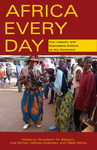
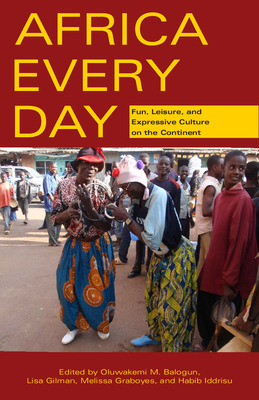
Africa Every Day : Fun, Leisure, and Expressive Culture on the Continent
Oluwakemi M. Balogun, Lisa Gilman, Melissa Graboyes, and Habib Iddrisu
Africa Every Day presents an exuberant, thoughtful, and necessary counterpoint to the prevailing emphasis in introductory African studies classes on war, poverty, corruption, disease, and human rights violations on the continent. These challenges are real and deserve sustained attention, but this volume shows that adverse conditions do not prevent people from making music, falling in love, playing sports, participating in festivals, writing blogs, telling jokes, making videos, playing games, eating delicious food, and finding pleasure in their daily lives.
Across seven sections—Celebrations and Rites of Passage; Socializing and Friendship; Love, Sex, and Marriage; Sports and Recreation; Performance, Language, and Creativity; Technology and Media; and Labor and Livelihoods—the accessible, multidisciplinary essays in Africa Every Day address these creative and dynamic elements of daily life, without romanticizing them. Ultimately, the book shows that forms of leisure and popular culture in Africa are best discussed in terms of indigenization, adaptation, and appropriation rather than the static binary of European/foreign/global and African. Most of all, it invites readers to reflect on the crucial similarities, rather than the differences, between their lives and those of their African counterparts.
Contributors: Hadeer Aboelnagah, Issahaku Adam, Joseph Osuolale Ayodokun, Victoria Abiola Ayodokun, Omotoyosi Babalola, Martha Bannikov, Mokaya Bosire, Emily Callaci, Deborah Durham, Birgit Englert, Laura Fair, John Fenn, Lara Rosenoff Gauvin, Michael Gennaro, Lisa Gilman, Charlotte Grabli, Joshua Grace, Dorothy L. Hodgson, Akwasi Kumi-Kyereme, Prince F. M. Lamba, Cheikh Tidiane Lo, Bill McCoy, Nginjai Paul Moreto, Jacqueline-Bethel Tchouta Mougoué, James Nindi, Erin Nourse, Eric Debrah Otchere, Alex Perullo, Daniel Jordan Smith, Maya Smith, Steven Van Wolputte, and Scott M. Youngstedt. -

African Asylum at a Crossroads: Activism, Expert Testimony, and Refugee Rights
Iris Berger, Tricia Redeker Hepner, Benjamin N. Lawrance, Joanna T. Tague, and Meredith Terretta
African Asylum at a Crossroads: Activism, Expert Testimony, and Refugee Rights examines the emerging trend of requests for expert opinions in asylum hearings or refugee status determinations. This is the first book to explore the role of court-based expertise in relation to African asylum cases and the first to establish a rigorous analytical framework for interpreting the effects of this new reliance on expert testimony.
Over the past two decades, courts in Western countries and beyond have begun demanding expert reports tailored to the experience of the individual claimant. As courts increasingly draw upon such testimony in their deliberations, expertise in matters of asylum and refugee status is emerging as an academic area with its own standards, protocols, and guidelines. This deeply thoughtful book explores these developments and their effects on both asylum seekers and the experts whose influence may determine their fate.
Contributors: Iris Berger, Carol Bohmer, John Campbell, Katherine Luongo, E. Ann McDougall, Karen Musalo, Tricia Redeker Hepner, Amy Shuman, Joanna T. Tague, Meredith Terretta, and Charlotte Walker-Said.
-
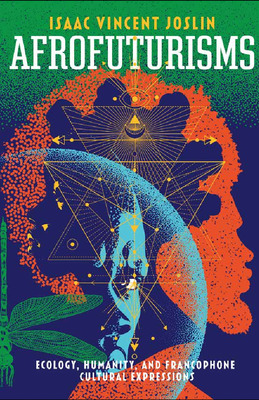
Afrofuturisms : Ecology, Humanity, and Francophone Cultural Expressions
Isaac Vincent Joslin
An exploration of Francophone African literary imaginations and expressions through the lens of Afrofuturism
Generally attributed to the Western imagination, science fiction is a literary genre that has expressed projected technological progress since the Industrial Revolution. However, certain fantastical elements in African literary expressions lend themselves to science fiction interpretations, both utopian and dystopian. When the concept of science is divorced from its Western, rationalist, materialist, positivist underpinnings, science fiction represents a broad imaginative space that supersedes the limits of this world. Whether it be on the moon, under the sea, or elsewhere within the imaginative universe, Afrofuturist readings of select films, novels, short stories, plays, and poems reveal a similarly emancipatory African future that is firmly rooted in its own cultural mythologies, cosmologies, and philosophies.
Isaac Joslin identifies the contours and modalities of a speculative, futurist science fiction rooted in the sociocultural and geopolitical context of continental African imaginaries. Constructing an arc that begins with gender identity and cultural plurality as the bases for an inherently multicultural society, this project traces the essential role of language and narrativity in processing traumas that stem from the violence of colonial and neocolonial interventions in African societies.
Joslin then outlines the influential role of discursive media that construct divisions and create illusions about societal success, belonging, and exclusion, while also identifying alternative critical existential mythologies that promote commonality and social solidarity. The trajectory proceeds with a critical analysis of the role of education in affirming collective identity in the era of globalization; the book also assesses the market-driven violence that undermines efforts to instill and promote cultural and social autonomy.
Last, this work proposes an egalitarian and ecological ethos of communal engagement with and respect for the diversity of the human and natural worlds. -

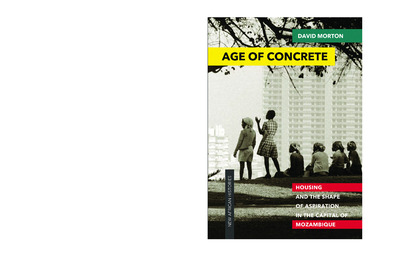
Age of Concrete : Housing and the Shape of Aspiration in the Capital of Mozambique
David Morton
Age of Concrete is a history of the making of houses and homes in the subúrbios of Maputo (Lourenço Marques), Mozambique, from the late 1940s to the present. Often dismissed as undifferentiated, ahistorical “slums,” these neighborhoods are in fact an open-air archive that reveals some of people’s highest aspirations. At first people built in reeds. Then they built in wood and zinc panels. And finally, even when it was illegal, they risked building in concrete block, making permanent homes in a place where their presence was often excruciatingly precarious.
Unlike many histories of the built environment in African cities, Age of Concrete focuses on ordinary homebuilders and dwellers. David Morton thus models a different way of thinking about urban politics during the era of decolonization, when one of the central dramas was the construction of the urban stage itself. It shaped how people related not only to each other but also to the colonial state and later to the independent state as it stumbled into being.
Original, deeply researched, and beautifully composed, this book speaks in innovative ways to scholarship on urban history, colonialism and decolonization, and the postcolonial state. Replete with rare photographs and other materials from private collections, Age of Concrete establishes Morton as one of a handful of scholars breaking new ground on how we understand Africa’s cities.
-

Ailing in Place: Environmental Inequities and Health Disparities in Appalachia
Michele Morrone
In Ailing in Place, Michele Morrone explores the relationship between environmental conditions in Appalachia and health outcomes that are too often ascribed to individual choices only. She applies quantitative data to observations from environmental health professionals to frame the ways in which the environment, as a social determinant of health, leads to health disparities in Appalachian communities. These examples—these stories of place—trace the impacts of water quality, waste disposal, and natural resource extraction on the health and quality of life of Appalachian people.
Public health is inextricably linked to place. Environmental conditions such as contaminated water, unsafe food, and polluted air are as important as culture, community, and landscape in characterizing a place and determining the health outcomes of the people who live there. In some places, the state of the environment is a consequence of historical activities related to natural resources and cultural practices. In others, political decisions to achieve short-term economic objectives are made with little consideration of long-term public health consequences.
-
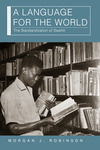
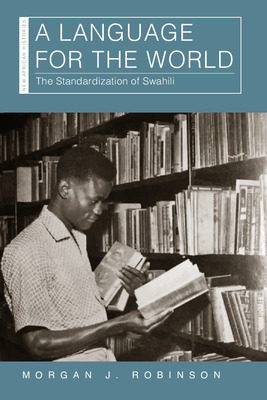
A Language for the World: The Standardization of Swahili
Morgan J. Robinson
This intellectual history of Standard Swahili explores the long-term, intertwined processes of standard making and community creation in the historical, political, and cultural contexts of East Africa and beyond.
Morgan J. Robinson argues that the portability of Standard Swahili has contributed to its wide use not only across the African continent but also around the globe. The book pivots on the question of whether standardized versions of African languages have empowered or oppressed. It is inevitable that the selection and promotion of one version of a language as standard—a move typically associated with missionaries and colonial regimes—negatively affected those whose language was suddenly deemed nonstandard. Before reconciling the consequences of codification, however, Robinson argues that one must seek to understand the process itself. The history of Standard Swahili demonstrates how events, people, and ideas move rapidly and sometimes surprisingly between linguistic, political, social, or temporal categories.
Robinson conducted her research in Zanzibar, mainland Tanzania, and the United Kingdom. Organized around periods of conversation, translation, and codification from 1864 to 1964, the book focuses on the intellectual history of Swahili’s standardization. The story begins in mid-nineteenth-century Zanzibar, home of missionaries, formerly enslaved students, and a printing press, and concludes on the mainland in the mid-twentieth century, as nationalist movements added Standard Swahili to their anticolonial and nation-building toolkits. This outcome was not predetermined, however, and Robinson offers a new context for the strong emotions that the language continues to evoke in East Africa.
The history of Standard Swahili is not one story, but rather the connected stories of multiple communities contributing to the production of knowledge. The book reflects this multiplicity by including the narratives of colonial officials and anticolonial nationalists; East African clerks, students, newspaper editors, editorialists, and their readers; and library patrons, academic linguists, formerly enslaved children, and missionary preachers. The book reconstructs these stories on their own terms and reintegrates them into a new composite that demonstrates the central place of language in the history of East Africa and beyond.
-

All about Flowers : James Vick's Nineteenth-Century Seed Company
Thomas J. Mickey
A nineteenth-century entrepreneur’s bold, innovative marketing helped transform flower gardens into one of America’s favorite hobbies.
“There is much that is hard and productive of sorrow in this sin-plagued world of ours; and, had we no flowers, I believe existence would be hard to be borne.” So states a customer’s 1881 letter—one of thousands James Vick regularly received. Vick’s business, selling flower seeds through the mail, wasn’t unique, but it was wildly successful because he understood better than his rivals how to engage customers’ emotions. He sold the love of flowers along with the flower seeds.
Vick was genuinely passionate about floriculture, but he also pioneered what we now describe as integrated marketing. He spent a mind-boggling $100,000 per year on advertising (mostly to women, his target demographic); he courted newspaper editors for free publicity; his educational guides presaged today’s content marketing; he recruited social influencers to popularize neighborhood gardening clubs; and he developed a visually rich communication and branding strategy to build customer loyalty and inflect their purchasing needs with purchasing desire. -

Alternative Models of Sports Development in America: Solutions to a Crisis in Education and Public Health
B. David Ridpath
In the United States, the entanglement of sports and education has persisted for over a century. Multimillion-dollar high school football stadiums, college coaches whose salaries are many times those of their institutions’ presidents, psychological and educational tolls on student-athletes, and high-profile academic scandals are just symptoms of a system that has come under increasing fire. Institutions large and small face persistent quandaries: which do they value more, academic integrity or athletic success? Which takes precedence: prioritizing elite teams and athletes, or making it possible for all students to participate in sports? How do we create opportunities for academic—not just athletic—development for players?
In Alternative Models of Sports Development in America, B. David Ridpath—a leading sports development researcher who has studied both the US system and the European club model—offers clear steps toward creating a new status quo. He lays out four possible alternative models that draw various elements from academic, athletic, and European approaches. His proposals will help increase access of all young people to the benefits of sports and exercise, allow athletes to also thrive as students, and improve competitiveness. The result is a book that will resonate with sports development professionals, academic administrators, and parents.
-

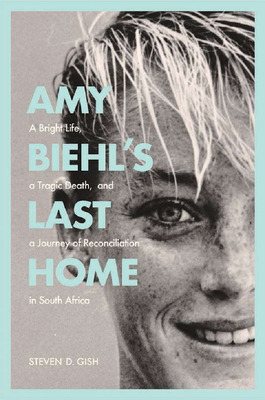
Amy Biehl’s Last Home : A Bright Life, a Tragic Death, and a Journey of Reconciliation in South Africa
Steven D. Gish
In 1993, white American Fulbright scholar Amy Biehl was killed in a racially motivated attack near Cape Town, after spending months working to promote democracy and women’s rights in South Africa. The ironic circumstances of her death generated enormous international publicity and yielded one of South Africa’s most heralded stories of postapartheid reconciliation. Amy’s parents not only established a humanitarian foundation to serve the black township where she was killed, but supported amnesty for her killers and hired two of the young men to work for the Amy Biehl Foundation. The Biehls were hailed as heroes by Nelson Mandela, Desmond Tutu, and many others in South Africa and the United States—but their path toward healing was neither quick nor easy.
Granted unrestricted access to the Biehl family’s papers, Steven Gish brings Amy and the Foundation to life in ways that have eluded previous authors. He is the first to place Biehl’s story in its full historical context, while also presenting a gripping portrait of this remarkable young woman and the aftermath of her death across two continents. -
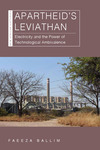
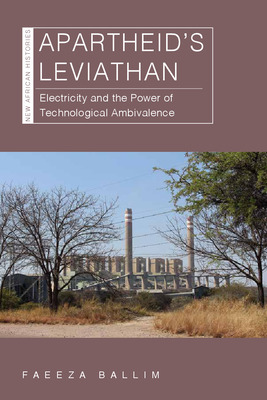
Apartheid’s Leviathan : Electricity and the Power of Technological Ambivalence
Faeeza Ballim
A fascinating study that shows how the intersection of technology and politics has shaped South African history since the 1960s.
This book details the development of an interconnected technological system of a coal mine and of the Matimba and Medupi power stations in the Waterberg, a rural region of South Africa near the country’s border with Botswana. South Africa’s state steel manufacturing corporation, Iscor, which has since been privatized, developed a coal mine in the region in the 1970s. This set the stage for the national electricity provider, Eskom, to build coal-fueled power stations in the Waterberg.
Faeeza Ballim follows the development of these technological systems from the late 1960s, a period of heightened repression as the apartheid government attempted to realize its vision of racial segregation, to the deeply fraught construction of the Medupi power station in postapartheid South Africa. The Medupi power station was planned toward the end of the first decade of the twenty-first century as a measure to alleviate the country’s electricity shortage, but the continued delay of its completion and the escalation of its costs meant that it failed to realize those ambitions while public frustration and electricity outages grew.
By tracing this story, this book highlights the importance of technology to our understanding of South African history. This characterization challenges the idea that the technological state corporations were proxies for the apartheid government and highlights that their activities in the Waterberg did not necessarily accord with the government’s strategic purposes. While a part of the broader national modernization project under apartheid, they also set the stage for worker solidarity and trade union organization in the Waterberg and elsewhere in the country. This book also argues that the state corporations, their technology, and their engineers enjoyed ambivalent relationships with the governments of their time, relationships that can be characterized as both autonomous and immersive. In the era of democracy, while Eskom has been caught up in government corruption—a major scourge to the fortunes of South Africa—it has also retained a degree of organizational autonomy and offered a degree of resistance to those who sought to further corruption.The examination of the workings of these technological systems, and the state corporations responsible for them, complicates conventional understandings of the transition from the authoritarian rule of apartheid to democratic South Africa, which coincided with the transition from state-led development to neoliberalism. This book is an indispensable case study on the workings of industrial and political power in Africa and beyond.
-
A Saturnalia of Bunk : Selections from The Free Lance, 1911–1915
H. L. Mencken and S. T. Joshi
H. L. Mencken’s reputation as a journalist and cultural critic of the twentieth century has endured well into the twenty-first. His early contributions as a writer, however, are not very well known. He began his journalistic career as early as 1899 and in 1910 cofounded the Baltimore Evening Sun. The next year he initiated a column—The Free Lance—that ran six days a week for four and a half years, until the Sun discontinued it, partially in response to Mencken’s controversial defense of Germany during World War One.
In this early forum for his renowned wit, Mencken broached many of the issues to which he would return again and again over his career, establishing himself as a fearless iconoclast willing to tackle the most divisive subjects and apply a heady mix of observation, satire, and repartee to clear away what he regarded as the “saturnalia of bunk” that clouded American thinking. The Free Lance reveals Mencken at his scintillating best as a journalist, polemicist, and satirist.
These columns are collected here for the first time, edited and annotated by Mencken expert and critic S. T. Joshi. This extraordinary collection is an invaluable resource for Mencken scholars and fans and provides an entertaining immersion into the early twentieth-century American zeitgeist. -
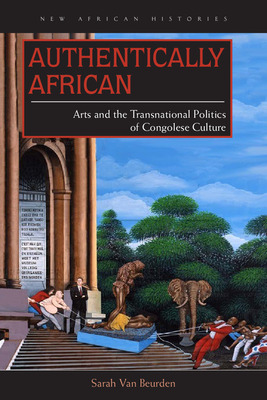
Authentically African : Arts and the Transnational Politics of Congolese Culture
Sarah Van Beurden
Together, the Royal Museum for Central Africa in Tervuren, Belgium, and the Institut des Musées Nationaux du Zaire (IMNZ) in the Congo have defined and marketed Congolese art and culture. In Authentically African, Sarah Van Beurden traces the relationship between the possession, definition, and display of art and the construction of cultural authenticity and political legitimacy from the late colonial until the postcolonial era. Her study of the interconnected histories of these two institutions is the first history of an art museum in Africa, and the only work of its kind in English.
Drawing on Flemish-language sources other scholars have been unable to access, Van Beurden illuminates the politics of museum collections, showing how the IMNZ became a showpiece in Mobutu’s effort to revive “authentic” African culture. She reconstructs debates between Belgian and Congolese museum professionals, revealing how the dynamics of decolonization played out in the fields of the museum and international heritage conservation. Finally, she casts light on the art market, showing how the traveling displays put on by the IMNZ helped intensify collectors’ interest and generate an international market for Congolese art.
The book contributes to the fields of history, art history, museum studies, and anthropology and challenges existing narratives of Congo’s decolonization. It tells a new history of decolonization as a struggle over cultural categories, the possession of cultural heritage, and the right to define and represent cultural identities. -
Becoming a Place of Unrest : Environmental Crisis and Ecophenomenological Praxis
Robert Booth
The key to mitigating the environmental crisis isn’t just based on science; it depends upon a profound philosophical revision of how we think about and behave in relation to the world.
Our ongoing failure to interrupt the environmental crisis in a meaningful way stems, in part, from how we perceive the environment—what Robert Booth calls the "more-than-human world.” Anthropocentric presumptions of this world, inherited from natural science, have led us to better scientific knowledge about environmental problems and more science-based—yet inadequate—practical “solutions.” That’s not enough, Booth argues. Rather, he asserts that we must critically and self-reflexively revise how we perceive and consider ourselves within the more-than-human world as a matter of praxis in order to arrest our destructive impact on it.
Across six chapters, Booth brings ecophenomenology—environmentally focused phenomenology—into productive dialogue with a rich array of other philosophical approaches, such as ecofeminism, new materialism, speculative realism, and object-oriented ontology. The book thus outlines and justifies why and how a specifically ecophenomenological praxis may lead to the disruption of the environmental crisis at its root.
Booth’s observations and arguments make the leap from theory to practice insofar as they may influence how we fundamentally grasp the environmental crisis and what promising avenues of practical activism might look like. In Booth’s view, this is not about achieving a global scientific consensus regarding the material causes of the environmental crisis or the responsible use of “natural resources.” Instead, Booth calls for us to habitually resist our impetus to uncritically reduce more-than-human entities to “natural resources” in the first place.
As Booth recognizes, Becoming a Place of Unrest cannot and does not tell us how we should act. Instead, it outlines and provides the basic means by which to instill positive and responsible conceptual and behavioral relationships with the rest of the world. Based on this, there is hope that we may begin to develop more concrete, actionable policies that bring about profound and lasting change. -
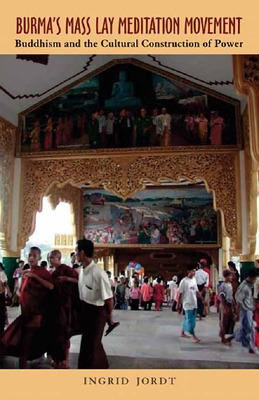
Burma’s Mass Lay Meditation Movement : Buddhism and the Cultural Construction of Power
Ingrit Jordt
Burma’s Mass Lay Meditation Movement: Buddhism and the Cultural Construction of Power describes a transformation in Buddhist practice in contemporary Burma. This revitalization movement has had real consequences for how the oppressive military junta, in power since the early 1960s, governs the country.
Drawing on more than ten years of extensive fieldwork in Burma, Ingrid Jordt explains how vipassanā meditation has brought about a change of worldview for millions of individuals, enabling them to think and act independently of the totalitarian regime. She addresses human rights as well as the relationship between politics and religion in a country in which neither the government nor the people clearly separates the two. Jordt explains how the movement has been successful in its challenge to the Burmese military dictatorship where democratically inspired resistance movements have failed.
Jordt’s unsurpassed access to the centers of political and religious power in Burma becomes the reader’s opportunity to witness the political workings of one of the world’s most secretive and tyrannically ruled countries. Burma’s Mass Lay Meditation Movement is a valuable contribution to Buddhist studies as well as anthropology, religious studies, and political science. -
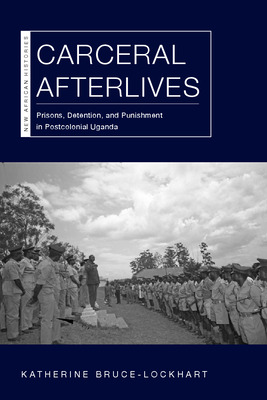
Carceral Afterlives : Prisons, Detention, and Punishment in Postcolonial Uganda
Katherine Bruce-Lockhart
Drawing upon social history, political history, and critical prison studies, this book analyzes how prisons and other instruments of colonial punishment endured after independence and challenges their continued existence.
In Carceral Afterlives, Katherine Bruce-Lockhart traces the politics, practices, and lived experiences of incarceration in postcolonial Uganda, focusing on the period between independence in 1962 and the beginning of Yoweri Museveni’s presidency in 1986. During these decades, Ugandans experienced multiple changes of government, widespread state violence, and war, all of which affected the government’s approach to punishment. Bruce-Lockhart analyzes the relationship between the prison system and other sites of confinement—including informal detention spaces known as “safe houses” and wartime camps—and considers other forms of punishment, such as public executions and “disappearance” by state paramilitary organizations.
Through archival and personal collections, interviews with Ugandans who lived through these decades, and a range of media sources and memoirs, Bruce-Lockhart examines how carceral systems were imagined and experienced by Ugandans held within, working for, or impacted by them. She shows how Uganda’s postcolonial leaders, especially Milton Obote and Idi Amin, attempted to harness the symbolic, material, and coercive power of prisons in the pursuit of a range of political agendas. She also examines the day-to-day realities of penal spaces and public perceptions of punishment by tracing the experiences of Ugandans who were incarcerated, their family members and friends, prison officers, and other government employees. Furthermore, she shows how the carceral arena was an important site of dissent, examining how those inside and outside of prisons and other spaces of captivity challenged the state’s violent punitive tactics.
Using Uganda as a case study, Carceral Afterlives emphasizes how prisons and the wider use of confinement—both as a punishment and as a vehicle for other modes of punishment—remain central to state power in the Global South and North. While scholars have closely analyzed the prison’s expansion through colonial rule and the rise of mass incarceration in the United States, they have largely taken for granted its postcolonial persistence. In contrast, Bruce-Lockhart demonstrates how the prison’s transition from a colonial to a postcolonial institution explains its ubiquity and reveals ways to critique and challenge its ongoing existence. The book thus explores broader questions about the unfinished work of decolonization, the relationship between incarceration and struggles for freedom, and the prison’s enduring yet increasingly contested place in our global institutional landscape. -

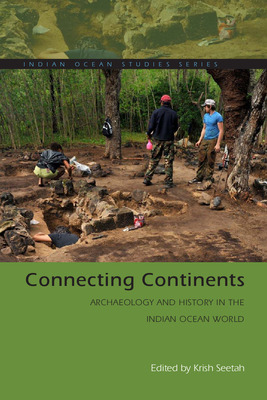
Cargoes in Motion: Materiality and Connectivity across the Indian Ocean
Burkhard Schnepel and Julia Verne
An innovative collection of essays that foregrounds specific cargoes as a means to understand connectivity and mobility across the Indian Ocean world.
Scholars have long appreciated the centrality of trade and commerce in understanding the connectivity and mobility that underpin human experience in the Indian Ocean region. But studies of merchant and commercial activities have paid little attention to the role that cargoes have played in connecting the disparate parts of this vast oceanic world. Drawing from the work of anthropologists, geographers, and historians, Cargoes in Motion tells the story of how material objects have informed and continue to shape processes of exchange across the Indian Ocean.
By following selected cargoes through both space and time, this book makes an important and innovative contribution to Indian Ocean studies. The multidisciplinary approach deepens our understanding of the nature and dynamics of the Indian Ocean world by showing how transoceanic connectivity has been driven not only by economic, social, cultural, and political factors but also by the materiality of the objects themselves.
Essays by:
Edward A. Alpers
Fahad Ahmad Bishara
Eva-Maria Knoll
Karl-Heinz Kohl
Lisa Jenny Krieg
Pedro Machado
Rupert Neuhöfer
Mareike Pampus
Hannah Pilgrim
Burkhard Schnepel
Hanne Schönig
Tansen Sen
Steven Serels
Julia Verne
Kunbing Xiao -
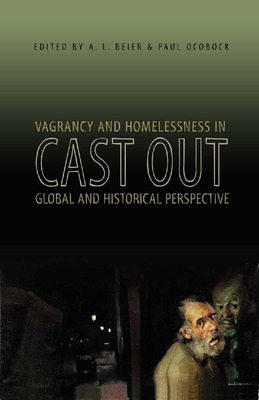
Cast Out: Vagrancy and Homelessness in Global and Historical Perspective
A. L. Beier and Paul Ocobock
Throughout history, those arrested for vagrancy have generally been poor men and women, often young, able-bodied, unemployed, and homeless. Most histories of vagrancy have focused on the European and American experiences. Cast Out: Vagrancy and Homelessness in Global and Historical Perspective is the first book to consider the shared global heritage of vagrancy laws, homelessness, and the historical processes they accompanied.
In this ambitious collection, vagrancy and homelessness are used to examine a vast array of phenomena, from the migration of labor to social and governmental responses to poverty through charity, welfare, and prosecution. The essays in Cast Out represent the best scholarship on these subjects and include discussions of the lives of the underclass, strategies for surviving and escaping poverty, the criminalization of poverty by the state, the rise of welfare and development programs, the relationship between imperial powers and colonized peoples, and the struggle to achieve independence after colonial rule. By juxtaposing these histories, the authors explore vagrancy as a common response to poverty, labor dislocation, and changing social norms, as well as how this strategy changed over time and adapted to regional peculiarities.
Part of a growing literature on world history, Cast Out offers fresh perspectives and new research in fields that have yet to fully investigate vagrancy and homelessness. This book by leading scholars in the field is for policy makers, as well as for courses on poverty, homelessness, and world history.
Contributors: Richard B. Allen, David Arnold, A. L. Beier, Andrew Burton, Vincent DiGirolamo, Andrew A. Gentes, Robert Gordon, Frank Tobias Higbie, Thomas H. Holloway, Abby Margolis, Paul Ocobock, Aminda M. Smith, Linda Woodbridge
-
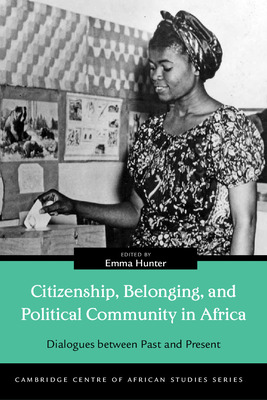
Citizenship, Belonging, and Political Community in Africa: Dialogues between Past and Present
Emma Hunter
Africa, it is often said, is suffering from a crisis of citizenship. At the heart of the contemporary debates this apparent crisis has provoked lie dynamic relations between the present and the past, between political theory and political practice, and between legal categories and lived experience. Yet studies of citizenship in Africa have often tended to foreshorten historical time and privilege the present at the expense of the deeper past.
Citizenship, Belonging, and Political Community in Africa provides a critical reflection on citizenship in Africa by bringing together scholars working with very different case studies and with very different understandings of what is meant by citizenship. By bringing historians and social scientists into dialogue within the same volume, it argues that a revised reading of the past can offer powerful new perspectives on the present, in ways that might also indicate new paths for the future.
The project collects the works of up-and-coming and established scholars from around the globe. Presenting case studies from such wide-ranging countries as Sudan, Mauritius, South Africa, Côte d’Ivoire, and Ethiopia, the essays delve into the many facets of citizenship and agency as they have been expressed in the colonial and postcolonial eras. In so doing, they engage in exciting ways with the watershed book in the field, Mahmood Mamdani’s Citizen and Subject.
Contributors: Samantha Balaton-Chrimes, Frederick Cooper, Solomon M. Gofie, V. Adefemi Isumonah, Cherry Leonardi, John Lonsdale, Eghosa E.Osaghae, Ramola Ramtohul, Aidan Russell, Nicole Ulrich, Chris Vaughan, and Henri-Michel Yéré.
-
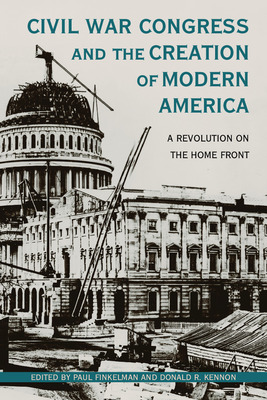
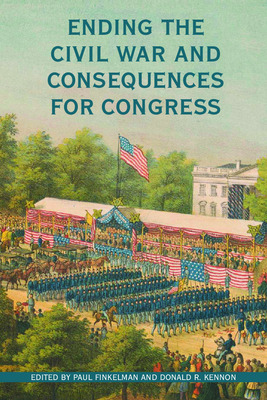
Civil War Congress and the Creation of Modern America: A Revolution on the Home Front
Paul Finkelman and Donald R. Kennon
Most literature on the Civil War focuses on soldiers, battles, and politics. But for every soldier in the United States Army, there were nine civilians at home. The war affected those left on the home front in many ways. Westward expansion and land ownership increased. The draft disrupted families while a shortage of male workers created opportunities for women that were previously unknown.
The war also enlarged the national government in ways unimagined before 1861. The Homestead Act, the Land Grant College Act, civil rights legislation, the use of paper currency, and creation of the Internal Revenue Service to collect taxes to pay for the war all illustrate how the war fundamentally, and permanently, changed the nation.
The essays in this book, drawn from a wide range of historical expertise and approaching the topic from a variety of angles, explore the changes in life at home that led to a revolution in American society and set the stage for the making of modern America.
Contributors: Jean H. Baker, Jenny Bourne, Paul Finkelman, Guy Gugliotta, Daniel W. Stowell, Peter Wallenstein, Jennifer L. Weber.
-

Coal and Culture: Opera Houses in Appalachia
William Faricy Condee
Opera houses were fixtures of Appalachian life from the end of the Civil War through the 1920s. Most towns and cities had at least one opera house during this golden age. Coal mining and railroads brought travelers, money, and change to the region. Many aspects of American life converged in the opera house.
Coal and Culture: Opera Houses in Appalachia is a critical appreciation of the opera house in the coal-mining region of Appalachia from the mid-1860s to the early 1930s. Author William Faricy Condee demonstrates that these were multipurpose facilities that were central to the life of their communities. In the era before radio, movies, television, and malls, these buildings were essential. They housed little, if any, opera, but were used for almost everything else, including traveling theater, concerts, religious events, lectures, commencements, boxing matches, benefits, union meetings, and—if the auditorium had a flat floor—skating and basketball.
The only book on opera houses that stresses their cultural context, Condee’s unique study will interest cultural geographers, scholars of Appalachian studies, and all those who appreciate the gaudy diversity of the American scene.
-

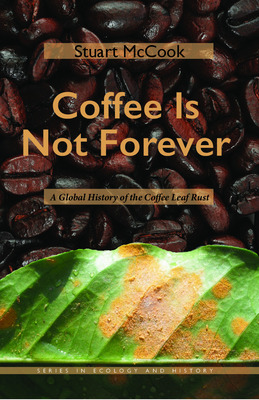
Coffee Is Not Forever : A Global History of the Coffee Leaf Rust
Stuart McCook
The global coffee industry, which fuels the livelihoods of farmers, entrepreneurs, and consumers around the world, rests on fragile ecological foundations. In Coffee Is Not Forever, Stuart McCook explores the transnational story of this essential crop through a history of one of its most devastating diseases, the coffee leaf rust. He deftly synthesizes agricultural, social, and economic histories with plant genetics and plant pathology to investigate the increasing interdependence of the world’s coffee-producing zones. In the process, he illuminates the progress and prognosis of the challenges—especially climate change—that pose an existential threat to a crop that global consumers often take for granted. And finally, in putting a tropical plant disease at the forefront, he has crafted the first truly global environmental history of coffee, pushing its study and the discipline in bold new directions.
Award: Henry A. Wallace Award
-
Collaborative Dickens : Authorship and Victorian Christmas Periodicals
Melisa Klimaszewski
From 1850 to 1867, Charles Dickens produced special issues (called “numbers”) of his journals Household Words and All the Year Round, which were released shortly before Christmas each year. In Collaborative Dickens, Melisa Klimaszewski undertakes the first comprehensive study of these Christmas numbers. She argues for a revised understanding of Dickens as an editor who, rather than ceaselessly bullying his contributors, sometimes accommodated contrary views and depended upon multivocal narratives for his own success.
Klimaszewski uncovers connections among and between the stories in each Christmas collection. She thus reveals ongoing conversations between the works of Dickens and his collaborators on topics important to the Victorians, including race, empire, supernatural hauntings, marriage, disability, and criminality. Stories from Wilkie Collins, Elizabeth Gaskell, and understudied women writers such as Amelia B. Edwards and Adelaide Anne Procter interact provocatively with Dickens’s writing. By restoring links between stories from as many as nine different writers in a given year, Klimaszewski demonstrates that a respect for the Christmas numbers’ plural authorship and intertextuality results in a new view of the complexities of collaboration in the Victorian periodical press and a new appreciation for some of the most popular texts Dickens published.
Printing is not supported at the primary Gallery Thumbnail page. Please first navigate to a specific Image before printing.