





















-

In Essentials, Unity : An Economic History of the Grange Movement
Jenny Bourne
The Patrons of Husbandry—or the Grange—is the longest-lived US agricultural society and, since its founding shortly after the Civil War, has had immeasurable influence on social change as enacted by ordinary Americans. The Grange sought to relieve the struggles of small farmers by encouraging collaboration. Pathbreaking for its inclusion of women, the Grange is also well known for its association with Gilded Age laws aimed at curbing the monopoly power of railroads.
In Essentials, Unity takes as its focus Grange founder Oliver Kelley and his home organization in Minnesota. Jenny Bourne draws upon numerous historical records to present a lively picture of a fraternal organization devoted to improving the lot of farmers but whose legacies extend far beyond agriculture. From struggles over minimum wage, birth control, and environmental regulation to the conflicts surrounding the Affordable Care Act, and from lunch-counter sit-ins to Occupy Wall Street, the Grange has shaped the very notion of collective action and how it is deployed even today. As this compact book so effectively illustrates, the history of the Patrons of Husbandry exposes the classic tension between the desires for achieving overall economic success and determining how the spoils are split.
-

In Idi Amin’s Shadow: Women, Gender, and Militarism in Uganda
Alicia C. Decker
In Idi Amin’s Shadow is a rich social history examining Ugandan women’s complex and sometimes paradoxical relationship to Amin’s military state. Based on more than one hundred interviews with women who survived the regime, as well as a wide range of primary sources, this book reveals how the violence of Amin’s militarism resulted in both opportunities and challenges for women. Some assumed positions of political power or became successful entrepreneurs, while others endured sexual assault or experienced the trauma of watching their brothers, husbands, or sons “disappeared” by the state’s security forces. In Idi Amin’s Shadow considers the crucial ways that gender informed and was informed by the ideology and practice of militarism in this period. By exploring this relationship, Alicia C. Decker offers a nuanced interpretation of Amin’s Uganda and the lives of the women who experienced and survived its violence.
Each chapter begins with the story of one woman whose experience illuminates some larger theme of the book. In this way, it becomes clear that the politics of military rule were highly relevant to women and gender relations, just as the politics of gender were central to militarism. By drawing upon critical security studies, feminist studies, and violence studies, Decker demonstrates that Amin’s dictatorship was far more complex and his rule much more strategic than most observers have ever imagined. -
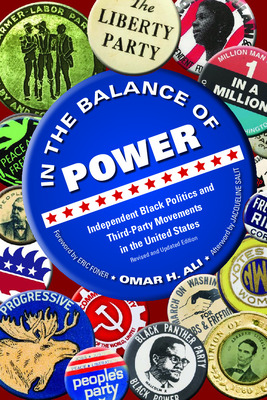
In the Balance of Power : Independent Black Politics and Third-Party Movements in the United States
Omar H. Ali
Reveals the multiple independent political tactics and strategies that African Americans have used to expand democracy and uphold civil and political rights since the founding of the nation.
This new edition of Ali’s groundbreaking narrative includes an epilogue by independent political analyst and leader Jacqueline Salit. New material addresses the historic presidencies of both Barack Obama and Donald Trump, as well as the rising tide of independent and anti-party sentiments."Historically, most black voters in the United States have aligned themselves with one of the two major parties: the Republican Party from the time of the Civil War to the New Deal and, since the New Deal - and especially since the height of the modern civil rights movement - the Democratic Party. However, as In the Balance of Power convincingly demonstrates, African Americans have long been part of independent political movements and have used third parties to advance some of the most important changes in the United States, notably the abolition of slavery, the extension of voting rights, and the enforcement of civil rights." "In the Balance of Power presents a history and analysis of African American third-party movements that can help us better understand the growing diversity among black voters today." --Jacket, 2008 edition.
-
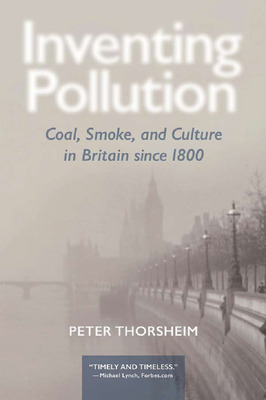
Inventing Pollution : Coal, Smoke, and Culture in Britain since 1800
Peter Thorsheim
Going as far back as the thirteenth century, Britons mined and burned coal. Britain’s supremacy in the nineteenth century depended in large part on its vast deposits of coal, which powered industry, warmed homes, and cooked food. As coal consumption skyrocketed, the air in Britain’s cities and towns filled with ever-greater and denser clouds of smoke. Yet, for much of the nineteenth century, few people in Britain even considered coal smoke to be pollution.
Inventing Pollution examines the radically new understanding of pollution that emerged in the late nineteenth century, one that centered not on organic decay but on coal combustion. This change, as Peter Thorsheim argues, gave birth to the smoke-abatement movement and to new ways of thinking about the relationships among humanity, technology, and the environment.
Even as coal production in Britain has plummeted in recent decades, it has surged in other countries. This reissue of Thorsheim’s far-reaching study includes a new preface that reveals the book’s relevance to the contentious national and international debates—which aren’t going away anytime soon—around coal, air pollution more generally, and the grave threat of human-induced climate change. -

Lit from Within: Contemporary Masters on the Art and Craft of Writing
Kevin Haworth and Dinty W. Moore
Lit from Within offers creative writers a window into the minds of some of America’s most celebrated contemporary authors. Witty, direct, and thought–provoking, these essays offer something to creative writers of all backgrounds and experience. With contributions from fiction writers, poets, and nonfiction writers, this is a collection of unusual breadth and quality.
Contributors: Lee K. Abbott, Rick Bass, Claire Bateman, Charles Baxter, Ron Carlson, Billy Collins, Peter Ho Davies, Carl Dennis, Stephen Dunn, Robin Hemley, Tony Hoagland, David Kirby, Maggie Nelson, Francine Prose, Mary Ruefle
-
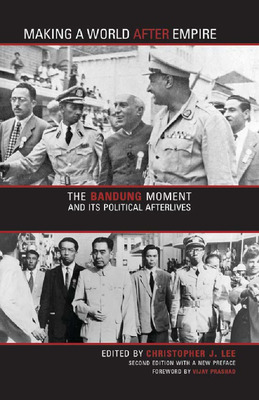
Making a World after Empire : The Bandung Moment and Its Political Afterlives
Christopher J. Lee
In April 1955, twenty-nine countries from Africa, Asia, and the Middle East came together for a diplomatic conference in Bandung, Indonesia, intending to define the direction of the postcolonial world. Ostensibly representing two-thirds of the world’s population, the Bandung conference occurred during a key moment of transition in the mid-twentieth century—amid the global wave of decolonization that took place after the Second World War and the nascent establishment of a new Cold War world order in its wake. Participants such as Jawaharlal Nehru of India, Gamal Abdel Nasser of Egypt, Zhou Enlai of China, and Sukarno of Indonesia seized this occasion to attempt the creation of a political alternative to the dual threats of Western neocolonialism and the Cold War interventionism of the United States and the Soviet Union.
The essays collected here explore the diverse repercussions of this event, tracing diplomatic, intellectual, and sociocultural histories that ensued as well as addressing the broader intersection of postcolonial and Cold War history. With a new foreword by Vijay Prashad and a new preface by the editor, Making a World after Empire speaks to contemporary discussions of decolonization, Third Worldism, and the emergence of the Global South, thus reestablishing the conference’s importance in twentieth-century global history.
Contributors: Michael Adas, Laura Bier, James R. Brennan, G. Thomas Burgess, Antoinette Burton, Dipesh Chakrabarty, Julian Go, Christopher J. Lee, Jamie Monson, Jeremy Prestholdt, and Denis M. Tull.
Award(s): Choice Significant University Press Title for Undergraduates, Ali Sastroamidjojo Award
-
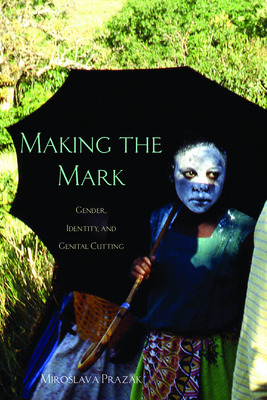
Making the Mark : Gender, Identity, and Genital Cutting
Miroslava Prazak
Why do female genital cutting practices persist? How does circumcision affect the rights of girls in a culture where initiation forms the lynchpin of the ritual cycle at the core of defining gender, identity, and social and political status? In Making the Mark, Miroslava Prazak follows the practice of female circumcision through the lives and activities of community members in a rural Kenyan farming society as they decide whether or not to participate in the tradition.
In an ethnography twenty years in the making, Prazak weaves multiple Kuria perspectives—those of girls, boys, family members, circumcisers, political and religious leaders—into a riveting account. Though many books have been published on the topic of genital cutting, this is one of the few ethnographies to give voice to evolving perspectives of practitioners, especially through a period of intense anticutting campaigning on the part of international NGOs, local activists, and donor organizations. Prazak also examines the cultural challenges that complicate the human-rights anti-FGM stance.
Set in the rolling hills of southwestern Kenya, Making the Mark examines the influences that shape and change female genital cutting over time, presenting a rich mosaic of the voices contributing to the debate over this life-altering ritual. -

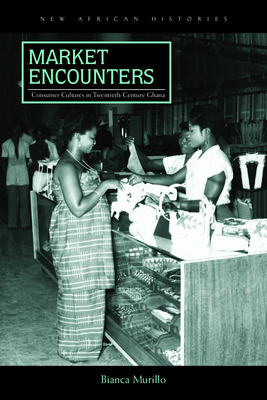
Market Encounters : Consumer Cultures in Twentieth-Century Ghana
Bianca Murillo
In Market Encounters, Bianca Murillo explores the shifting social terrains that made the buying and selling of goods in modern Ghana possible. Fusing economic and business history with social and cultural history, she traces the evolution of consumerism in the colonial Gold Coast and independent Ghana from the late nineteenth century through to the political turmoil of the 1970s.
Murillo brings sales clerks, market women, and everyday consumers in Ghana to the center of a story that is all too often told in sweeping metanarratives about what happens when African businesses are incorporated into global markets. By emphasizing the centrality of human relationships to Ghana’s economic past, Murillo introduces a radical rethinking of consumption studies from an Africa-centered perspective. The result is a keen look at colonial capitalism in all of its intricacies, legacies, and contradictions, including its entanglement with gender and race. -
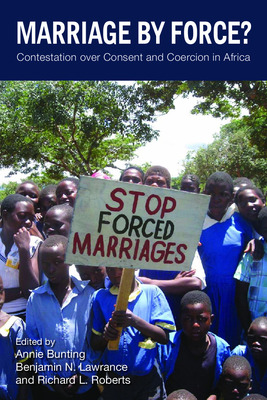
Marriage by Force? Contestation over Consent and Coercion in Africa
Annie Bunting, Benjamin N. Lawrance, and Richard L. Roberts
With forced marriage, as with so many human rights issues, the sensationalized hides the mundane, and oversimplified popular discourses miss the range of experiences. In sub-Saharan Africa, the relationship between coercion and consent in marriage is a complex one that has changed over time and place, rendering impossible any single interpretation or explanation.
The legal experts, anthropologists, historians, and development workers contributing to Marriage by Force? focus on the role that marriage plays in the mobilization of labor, the accumulation of wealth, and domination versus dependency. They also address the crucial slippage between marriages and other forms of gendered violence, bondage, slavery, and servile status.
Only by examining variations in practices from a multitude of perspectives can we properly contextualize the problem and its consequences. And while early and forced marriages have been on the human rights agenda for decades, there is today an unprecedented level of international attention to the issue, thus making the coherent, multifaceted approach of Marriage by Force? even more necessary.
-
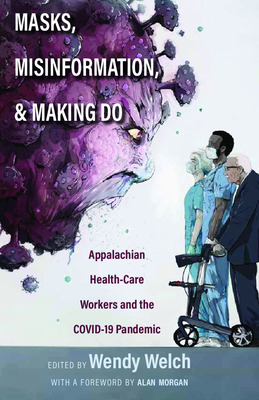
Masks, Misinformation, and Making Do: Appalachian Health-Care Workers and the COVID-19 Pandemic
Wendy Welch
The firsthand pandemic experiences of rural health-care providers—who were already burdened when COVID-19 hit—raise questions about the future of public health and health-care delivery.
This volume comprises the COVID-19 pandemic experiences of Appalachian health-care workers, including frontline providers, administrators, and educators. The combined narrative reveals how governmental and corporate policies exacerbated the region’s injustices, stymied response efforts, and increased the death toll.
Beginning with an overview of the SARS-CoV-2 virus and its impact on the body, the essays in the book’s first section provide background material and contextualize the subsequent explosion of telemedicine, the pandemic’s impact on medical education, and its relationship to systemic racism and related disparities in mental health treatment.
First-person narratives from diverse perspectives recount the pandemic’s layered stresses. These visceral, personal experiences of how Appalachian health-care workers responded to the pandemic amid the nation’s deeply polarized political discourse will shape the historical record of this “unprecedented time” and provide a glimpse into the future of rural medicine.
Contributors: Lucas Aidukaitis, Clay Anderson, Tammy Bannister, Alli Delp, Lynn Elliott, Monika Holbein, Laura Hungerford, Nikki King, Brittany Landore, Jeffrey J. LeBoeuf, Sojourner Nightingale, Beth O’Connor, Rakesh Patel, Mildred E. Perreault, Melanie B. Richards, Tara Smith, Kathy Osborne Still, Darla Timbo, Kathy Hsu Wibberly
-

Michael Field : Decadent Moderns
Sarah Parker and Ana Parejo Vadillo
In the last twenty years, Michael Field has emerged as one of the most fascinating poets of the Victorian era. Through their collaborative partnership as “Michael Field,” Katharine Bradley and Edith Cooper engaged in the aesthetic and decadent movements of the fin de siècle, while their poetry and verse drama articulate ideas associated with the New Woman and boldly express queer and lesbian desire. Michael Field: Decadent Moderns extends the focus on these key literary and cultural contexts by emphasizing their continuing significance within twentieth-century literary modernism. Through a series of interdisciplinary essays, this book addresses Michael Field’s energetic engagements with a range of topics including ecology, perfume, tourism, art history, sculpture, formalism, classics, and book history. In doing so, Michael Field: Decadent Moderns highlights the modernity, radicalism, and relevance of their work, both within the nineteenth and twentieth centuries as well as in our own cultural moment.
Contributors: Leire Barrera-Medrano, Joseph Bristow, Jill R. Ehnenn, Sarah E. Kersh, Kristin Mahoney, Catherine Maxwell, Alex Murray, Sarah Parker, Margaret D. Stetz, Kate Thomas, and Ana Parejo Vadillo.
-
Militarizing Marriage : West African Soldiers’ Conjugal Traditions in Modern French Empire
Sarah J. Zimmerman
Following tirailleurs sénégalais’ deployments in West Africa, Congo, Madagascar, North Africa, Syria-Lebanon, Vietnam, and Algeria from the 1880s to 1962, Militarizing Marriage historicizes how African servicemen advanced conjugal strategies with women at home and abroad. Sarah J. Zimmerman examines the evolution of women’s conjugal relationships with West African colonial soldiers to show how the sexuality, gender, and exploitation of women were fundamental to the violent colonial expansion and the everyday operation of colonial rule in modern French Empire.
These conjugal behaviors became military marital traditions that normalized the intimate manifestation of colonial power in social reproduction across the empire. Soldiers’ cross-colonial and interracial households formed at the intersection of race and sexuality outside the colonizer/colonized binary. Militarizing Marriage uses contemporary feminist scholarship on militarism and violence to portray how the subjugation of women was indispensable to military conquest and colonial rule. -
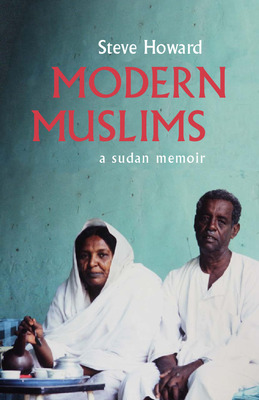
Modern Muslims : A Sudan Memoir
Steve Howard
Steve Howard departed for the Sudan in the early 1980s as an American graduate student beginning a three-year journey in which he would join and live with the Republican Brotherhood, the Sufi Muslim group led by the visionary Mahmoud Mohamed Taha. Taha was a religious intellectual who participated in the early days of Sudan’s anticolonial struggle, but quickly turned his movement into a religious reform effort based on his radical reading of the Qur’an. He was executed in 1985 for apostasy.
Decades after returning to the life of an academic in the United States, Howard brings us this memoir of his time with the Republican Brotherhood, who advocated, among other things, equality for women. Modern Muslims describes Howard’s path to learning not only about Islam and Sufism but also about Sudan’s history and culture. When the Brotherhood was thrust into confrontation with Sudan’s then-president Jaafar Nimeiry, Howard had a front-line perspective on the difficult choices communities make as they try to reform and practice their faith freely.
As well as a story of personal transformation, the book offers an insider’s perspective on a modernist nonviolent Islamic movement that thrived and was brutally suppressed. An important book for our times, Modern Muslims yields significant insights for our understanding of modern Islam, African history, and contemporary geopolitics. -
Motivation and the Primacy of Perception : Merleau-Ponty's Phenomenology of Knowledge
Peter Antich
Merleau-Ponty’s phenomenological notion of motivation advances a compelling alternative to the empiricist and rationalist assumptions that underpin modern epistemology.
Arguing that knowledge is ultimately founded in perceptual experience, Peter Antich interprets and defends Merleau-Ponty’s thinking on motivation as the key to establishing a new form of epistemic grounding. Upending the classical dichotomy between reason and natural causality, justification and explanation, Antich shows how this epistemic ground enables Merleau-Ponty to offer a radically new account of knowledge and its relation to perception. In so doing, Antich demonstrates how and why Merleau-Ponty remains a vital resource for today’s epistemologists. -
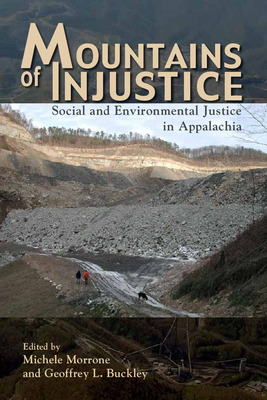
Mountains of Injustice : Social and Environmental Justice in Appalachia
Michele Morrone and Geoffrey L. Buckley
Research in environmental justice reveals that low-income and minority neighborhoods in our nation’s cities are often the preferred sites for landfills, power plants, and polluting factories. Those who live in these sacrifice zones are forced to shoulder the burden of harmful environmental effects so that others can prosper. Mountains of Injustice broadens the discussion from the city to the country by focusing on the legacy of disproportionate environmental health impacts on communities in the Appalachian region, where the costs of cheap energy and cheap goods are actually quite high.
Through compelling stories and interviews with people who are fighting for environmental justice, Mountains of Injustice contributes to the ongoing debate over how to equitably distribute the long-term environmental costs and consequences of economic development.
Contributors:
Laura Allen, Brian Black, Geoffrey L. Buckley, Donald Edward Davis, Wren Kruse, Nancy Irwin Maxwell, Chad Montrie, Michele Morrone, Kathryn Newfont, John Nolt, Jedediah S. Purdy, and Stephen J. Scanlan. -
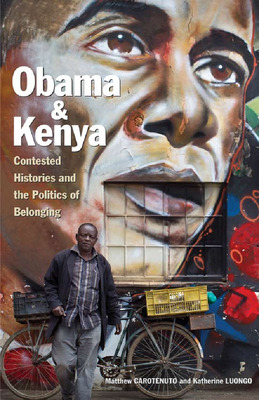
Obama and Kenya: Contested Histories and the Politics of Belonging
Matthew Carotenuto and Katherine Luongo
Barack Obama’s political ascendancy has focused considerable global attention on the history of Kenya generally and the history of the Luo community particularly. From politicos populating the blogosphere and bookshelves in the U.S and Kenya, to tourists traipsing through Obama’s ancestral home, a variety of groups have mobilized new readings of Kenya’s past in service of their own ends.
Through narratives placing Obama into a simplified, sweeping narrative of anticolonial barbarism and postcolonial “tribal” violence, the story of the United States president’s nuanced relationship to Kenya has been lost amid stereotypical portrayals of Africa. At the same time, Kenyan state officials have aimed to weave Obama into the contested narrative of Kenyan nationhood.
Matthew Carotenuto and Katherine Luongo argue that efforts to cast Obama as a “son of the soil” of the Lake Victoria basin invite insights into the politicized uses of Kenya’s past. Ideal for classroom use and directed at a general readership interested in global affairs, Obama and Kenya offers an important counterpoint to the many popular but inaccurate texts about Kenya’s history and Obama’s place in it as well as focused, thematic analyses of contemporary debates about ethnic politics, “tribal” identities, postcolonial governance, and U.S. African relations.
-
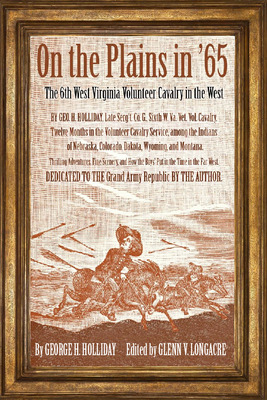
On the Plains in ’65 : The 6th West Virginia Volunteer Cavalry in the West
George H. Holliday and Glenn V. Longacre
A new scholarly edition of an Ohio boy soldier’s revealing post-Civil War memoir.
This annotated edition of Holliday’s recollections—known primarily among historians of the American West—re-contextualizes his memoir to include his boyhood in southern Ohio and the largely untold story of the hundreds of Buckeyes who crossed the Ohio River to serve their country in Virginia (later West Virginia) regiments, ultimately traveling across Kansas, Nebraska, Colorado, and Wyoming to safeguard mail and stage routes along the celebrated Oregon Trail during a pivotal time in American history.
Glenn Longacre’s extensive research in federal, state, and local archives, manuscript collections, and period newspapers complements his correspondence with the living descendants of Holliday and other soldiers. His research integrates this story deservedly as part of Appalachian history before, during, and after the Civil War. From this perspective it addresses an entirely new audience of Appalachian studies scholars, Civil War and frontier history enthusiasts, students, and general readers. -
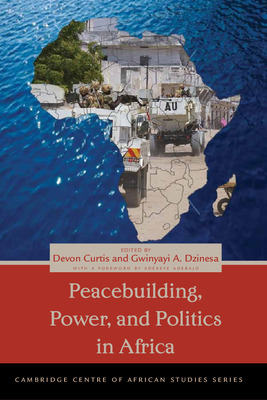
Peacebuilding, Power, and Politics in Africa
Devon Curtis and Gwinyayi A. Dzinesa
Peacebuilding, Power, and Politics in Africa is a critical reflection on peacebuilding efforts in Africa. The authors expose the tensions and contradictions in different clusters of peacebuilding activities, including peace negotiations; statebuilding; security sector governance; and disarmament, demobilization, and reintegration. Essays also address the institutional framework for peacebuilding in Africa and the ideological underpinnings of key institutions, including the African Union, NEPAD, the African Development Bank, the Pan-African Ministers Conference for Public and Civil Service, the UN Peacebuilding Commission, the World Bank, and the International Criminal Court. The volume includes on-the-ground case study chapters on Sudan, the Great Lakes Region of Africa, Sierra Leone and Liberia, the Niger Delta, Southern Africa, and Somalia, analyzing how peacebuilding operates in particular African contexts.
The authors adopt a variety of approaches, but they share a conviction that peacebuilding in Africa is not a script that is authored solely in Western capitals and in the corridors of the United Nations. Rather, the writers in this volume focus on the interaction between local and global ideas and practices in the reconstitution of authority and livelihoods after conflict. The book systematically showcases the tensions that occur within and between the many actors involved in the peacebuilding industry, as well as their intended beneficiaries. It looks at the multiple ways in which peacebuilding ideas and initiatives are reinforced, questioned, reappropriated, and redesigned by different African actors.
A joint project between the Centre for Conflict Resolution in Cape Town, South Africa, and the Centre of African Studies at the University of Cambridge.
-
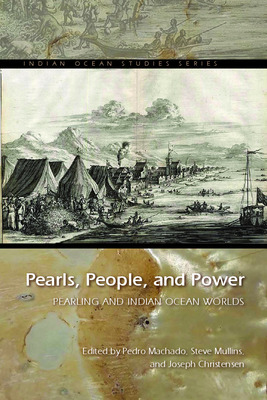
Pearls, People, and Power : Pearling and Indian Ocean Worlds
Pedro Machado, Steve Mullins, and Joseph Christensen
Pearls, People, and Power is the first book to examine the trade, distribution, production, and consumption of pearls and mother-of-pearl in the global Indian Ocean over more than five centuries. While scholars have long recognized the importance of pearling to the social, cultural, and economic practices of both coastal and inland areas, the overwhelming majority have confined themselves to highly localized or at best regional studies of the pearl trade. By contrast, this book stresses how pearling and the exchange in pearl shell were interconnected processes that brought the ports, islands, and coasts into close relation with one another, creating dense networks of connectivity that were not necessarily circumscribed by local, regional, or indeed national frames.
Essays from a variety of disciplines address the role of slaves and indentured workers in maritime labor arrangements, systems of bondage and transoceanic migration, the impact of European imperialism on regional and local communities, commodity flows and networks of exchange, and patterns of marine resource exploitation between the Industrial Revolution and Great Depression. By encompassing the geographical, cultural, and thematic diversity of Indian Ocean pearling, Pearls, People, and Power deepens our appreciation of the underlying historical dynamics of the many worlds of the Indian Ocean.
Contributors: Robert Carter, William G. Clarence-Smith, Joseph Christensen, Matthew S. Hopper, Pedro Machado, Julia T. Martínez, Michael McCarthy, Jonathan Miran, Steve Mullins, Karl Neuenfeldt, Samuel M. Ostroff, and James Francis Warren.
-
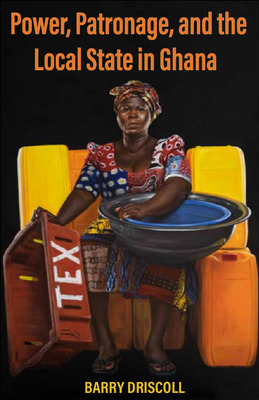
Power, Patronage, and the Local State in Ghana
Barry Driscoll
How have the waves of democracy and decentralization that swept the developing world in recent decades affected states—among the most important drivers of poverty and prosperity—at national and local levels in Ghana and beyond?
State actors beneath the national level—what Barry Driscoll calls the local state—have considerable responsibility for carrying out state functions, but they are also forced to compete for these local state offices. How does a local state actually work in poor twentieth-century countries?
This book offers a descriptive account, as well as a causal explanation, of how political competition affects the local state in Ghana. Driscoll shows how closely fought elections drive local state institutions to provide patronage. The source of these demands for patronage comes not from rent-seeking bureaucrats or landed elites but from the government’s own party volunteers. Driscoll explains how electoral competition affects how local state actors are insulated from such patronage demands.
Moreover, these highly competitive, patronage-providing local governments actually have relatively better-qualified senior civil servants at their disposal. Driscoll makes sense of this paradox by introducing the logic of building administrative capacity in order to provide patronage. He then abstracts from the case of Ghana to generalize about how the effect of political competition is shaped by the locally salient variety of clientelism, which in turn is conditioned by the strength of the party system.
The book draws on fourteen months of fieldwork in six of Ghana’s districts, far from the nation’s capital city. Ethnographic and interview data come from time spent with market traders, tax collectors, politicians, and other figures in local state offices. Quantitative data come from a survey covering almost all local governments. The result is a detailed account of Ghana’s local state power dynamics that has relevant implications for states across the developing world. -
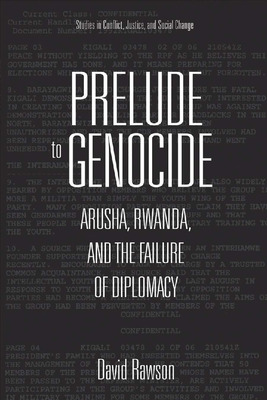
Prelude to Genocide: Arusha, Rwanda, and the Failure of Diplomacy
David Rawson
As the initial US observer, David Rawson participated in the 1993 Rwandan peace talks at Arusha, Tanzania. Later, he served as US ambassador to Rwanda during the last months of the doomed effort to make them hold. Despite the intervention of concerned states in establishing a peace process and the presence of an international mission, UNAMIR, the promise of the Arusha Peace Accords could not be realized. Instead, the downing of Rwandan president Habyarimana’s plane in April 1994 rekindled the civil war and opened the door to genocide.
In Prelude to Genocide, Rawson draws on declassified documents and his own experiences to seek out what went wrong. How did the course of political negotiations in Arusha and party wrangling in Kigali, Rwanda, bring to naught a concentrated international effort to establish peace? And what lessons are there for other international humanitarian interventions? The result is a commanding blend of diplomatic history and analysis that is a milestone read on the Rwandan crisis and on what happens when conflict resolution and diplomacy fall short.
Published in partnership with the ADST-DACOR Diplomats and Diplomacy Series.
-
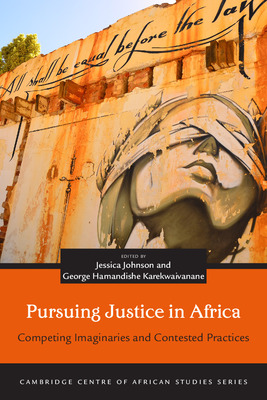
Pursuing Justice in Africa: Competing Imaginaries and Contested Practices
Jessica Johnson and George Hamandishe Karekwaivanane
Pursuing Justice in Africa focuses on the many actors pursuing many visions of justice across the African continent—their aspirations, divergent practices, and articulations of international and vernacular idioms of justice. The essays selected by editors Jessica Johnson and George Hamandishe Karekwaivanane engage with topics at the cutting edge of contemporary scholarship across a wide range of disciplines. These include activism, land tenure, international legal institutions, and postconflict reconciliation.
Building on recent work in sociolegal studies that foregrounds justice over and above concepts such as human rights and legal pluralism, the contributors grapple with alternative approaches to the concept of justice and its relationships with law, morality, and rights. While the chapters are grounded in local experiences, they also attend to the ways in which national and international actors and processes influence, for better or worse, local experiences and understandings of justice. The result is a timely and original addition to scholarship on a topic of major scholarly and pragmatic interest.
Contributors: Felicitas Becker, Jonathon L. Earle, Patrick Hoenig, Stacey Hynd, Fred Nyongesa Ikanda, Ngeyi Ruth Kanyongolo, Anna Macdonald, Bernadette Malunga, Alan Msosa, Benson A. Mulemi, Holly Porter, Duncan Scott, Olaf Zenker.
-
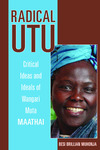
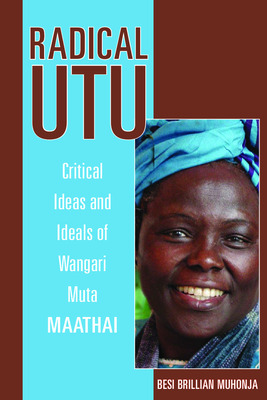
Radical Utu : Critical Ideas and Ideals of Wangari Muta Maathai
Besi Brillian Muhonja
Wangari Muta Maathai was a scholar-activist known for founding the Green Belt Movement, an environmental campaign that earned her the Nobel Peace Prize. While many studies of Maathai highlight her activism, few examine Maathai as a scholar whose contributions to various disciplines and causes spanned more than three decades.
In Radical Utu: Critical Ideas and Ideals of Wangari Muta Maathai, Besi Brillian Muhonja presents the words and works of Maathai as theoretical concepts attesting to her contributions to gender equality, democratic spaces, economic equity and global governance, and indigenous African languages and knowledges. Muhonja’s well-rounded portrait of Maathai’s ideas offers a corrective to the one-dimensional characterization of Maathai typical of other works. -
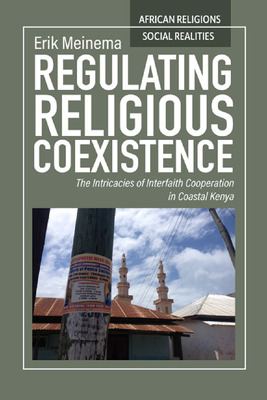
Regulating Religious Coexistence : The Intricacies of Interfaith Cooperation in Coastal Kenya
Erik Meinema
Regulating Religious Coexistence offers a compelling ethnographic analysis of how Muslims, Christians, and practitioners of indigenous African religions negotiate coexistence in Kenya’s coastal region. The book conceptualizes religious diversity as a dynamic field shaped by multiple partly intersecting and partly conflicting models of interaction. These include the political secularism promoted by the Kenyan state and civil society organizations focused on interfaith harmony, forms of competition between religious groups, and pluralistic practices in which individuals draw on multiple traditions to meet spiritual needs.
Through a close examination of civil society initiatives funded by Western donors to foster peacebuilding and to counter violent extremism, the book investigates how these models for coexistence are negotiated and contested and how they intersect with historical and contemporary patterns. It demonstrates that modes of religious coexistence in coastal Kenya have been shaped by colonial and postcolonial governance, transregional connections, and interactions between Christians, Muslims, and Traditionalists across time.
As one of the few monographs on political secularism in an African context, Regulating Religious Coexistence makes a significant contribution to scholarship on religious diversity and coexistence. It situates Christianity, Islam, and indigenous African traditions within a single conceptual framework, broadening earlier studies that mostly treated them in isolation. This book is essential reading for scholars of religion, anthropology, African studies, and political theory, offering fresh insights into the complex realities of religious diversity in Africa and beyond. -
Religion and Peace : Global Perspectives and Possibilities
Nukhet A. Sandal and Ingo Trauschweizer
Can religion help societies achieve peace and stability? What actions can religious leaders take to facilitate conflict resolution? This book addresses these critical questions in terms of numerous contemporary conflicts within and between countries.
In the aftermath of the 9/11 attacks, public attention to religion shifted away from its relationship to politics and toward its connection to violence in civil conflicts, wars, and terrorism. Religion’s role in sowing discord became more prominent than its ability to unify. Only recently have discussions turned toward the positive impact of religion and spirituality in the public sphere and to the role of faith in resolving diplomatic, political, and social problems. The essays in this book contribute to this discourse by examining past, present, and future opportunities to promote peace through religion and spirituality.
The contributors to this volume explore topics such as humanitarianism, philosophy, counterextremism, human rights, rituals, populism, foreign policy, and environmentalism. Some of the chapters approach these topics from a transnational perspective, while others focus on specific countries in Africa, Asia, Europe, Latin America, and the Middle East.
Contributors:
Jonathan C. Agensky
Slavica Jakelić
Afra Jalabi
Brandon Kendhammer
Loren D. Lybarger
Cecelia Lynch
Peter Mandaville
Jeremy Rinker
Margaret M. Scull
Amy Erica Smith
Printing is not supported at the primary Gallery Thumbnail page. Please first navigate to a specific Image before printing.